
Vinyl Flake Flooring Price: What Shapes Your Quote in Quebec City
October 10, 2026 · 4 min read
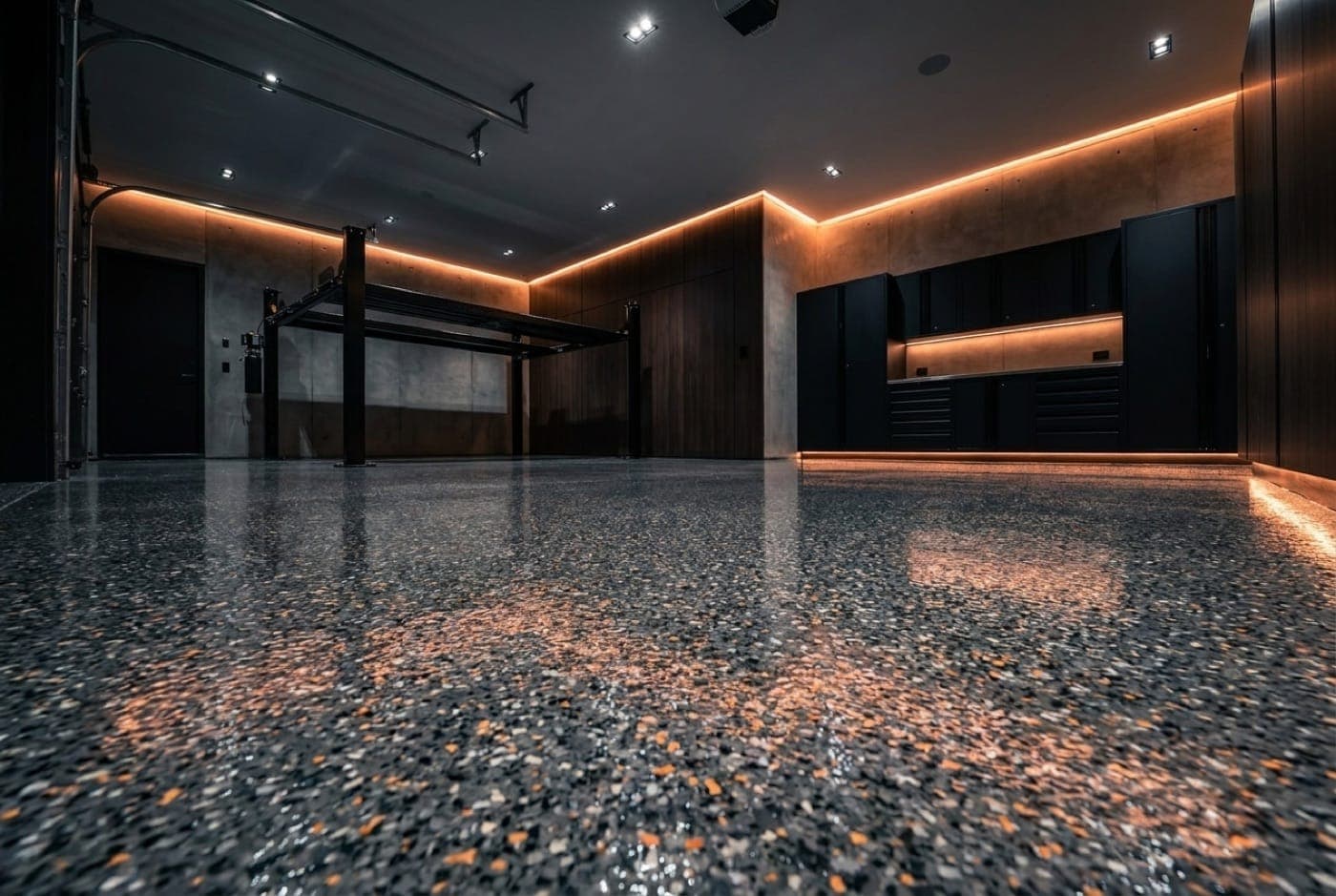
The price of a flake floor depends on the condition of your slab, the square footage to cover, the level of prep required and the thickness of the chosen system. At Époxy Québec Pro, vinyl flake epoxy flooring is prepped and installed by our own crew, from diamond grinding right through to the polyaspartic topcoat, throughout the Quebec City region. An on-site visit is still the only way to get an accurate number.
What actually makes the price of a flake floor change
A flake floor isn't a standard product sold by the square foot without any questions asked. Several factors go into putting together a serious quote:
- total square footage and the shape of the room (corners, columns and drains make the job more complex);
- the condition of the existing concrete: cracks, pitting, oil stains, an old coating to remove;
- the level of mechanical prep needed for the epoxy to bond properly;
- the thickness of the system applied and the flake density you want;
- the type of final sealant, since some projects need more resistance to UV or abrasion;
- details like upturned baseboards, door thresholds or drains to work around;
- site access and the amount of downtime the client can accept.
Two garages of the same size can require very different amounts of work if one has a clean slab and the other has a cracked slab with years of oil stains baked in.
The steps that justify the invoice
A flake floor that lasts 10 years isn't built by skipping steps. Here's the sequence we follow every time, with no subcontracting:
1. Slab assessment: we check for residual moisture, cracks and the overall condition of the concrete. 2. Diamond grinding: we open up the concrete surface to create an anchor profile, with no chemicals that leave residue behind. 3. Repairing defects: cracks, honeycombing and joints are dealt with before anything gets applied. 4. Base coat application: the base resin is poured and spread evenly. 5. Flake broadcast: the amount of flakes affects both the look and the anti-slip texture. 6. Polyaspartic sealant: this layer protects against wear, scratches and chemical exposure.
Every step that gets skipped or rushed shortens the floor's lifespan, no matter how much was paid upfront.
How to compare two quotes without getting burned
When two quotes for a flake floor show a big gap, the price alone tells you nothing. Ask these questions before comparing:
- Is the prep done with diamond grinding, or just an acid wash?
- What's the total system thickness, in mils?
- What kind of topcoat is used, and does it resist de-icing salts and UV exposure?
- Who actually does the work: the company itself or a subcontractor?
- What warranty covers the job, and for how long?
A detailed quote that clearly answers these points is worth more than a low number with no explanation. You can request a quote that breaks down every step before you sign anything.
Garage, basement, commercial space: different realities
The same product, vinyl flake epoxy, doesn't face the same conditions depending on where it's installed:
- Garage: exposure to de-icing salts, oil, tire impact and temperature swings. Solid prep and a resistant topcoat are essential.
- Basement: ambient humidity and residual moisture in the slab need to be checked before application, or adhesion suffers.
- Commercial space or workshop: repeated traffic and exposure to specific chemicals often call for extra thickness or a more durable finish.
- Patio: direct sun exposure and freeze-thaw cycles change which system makes sense.
These differences explain why two projects of identical square footage don't necessarily end up with the same invoice.
Mistakes that cost more down the road
Some decisions made to save money upfront end up costing more later:
- Skipping diamond grinding to speed up installation, which compromises adhesion.
- Ignoring residual moisture in a basement slab, leading to blistering or delamination.
- Choosing a finish that's too thin for commercial use or a high-traffic garage.
- Going with the lowest price without checking who's actually installing the floor and with what products.
A floor done right from the start avoids premature repairs, which often end up costing more than thorough prep would have in the first place. To learn more about finishes and installation steps, check out our blog.
Related reading:
Frequently asked questions
What is the price of a flake floor?
There's no fixed price, since the cost depends on square footage, the condition of the concrete, the level of prep required and the thickness of the chosen system. The only way to get a reliable number is an on-site quote that evaluates these factors directly.
What is the price of a polyurea floor with flakes?
As Époxy Québec Pro explains, polyurea and vinyl flake epoxy are two different systems with cure times and costs that vary depending on the product and the thickness applied. To compare both options for your project, the best approach is to request a detailed quote that spells out the recommended system.
How long does it take to install a flake floor?
According to Époxy Québec Pro, the timeline depends on square footage, the condition of the slab and the number of coats to apply, including the drying time between each step. A typical residential project usually takes a few days, including prep and the cure time for the polyaspartic.
What's the difference between vinyl, metallic and quartz flakes?
Vinyl flakes give a textured, coloured finish with a good balance of durability and looks, metallic is hand-poured for a one-of-a-kind visual effect, and double-broadcast quartz offers extra resistance often sought after in commercial settings. The choice depends on intended use and available budget.
Is flake flooring suitable for a garage in Quebec?
Yes, as long as the slab prep and final sealant are suited to de-icing salts, temperature swings and the vehicle traffic typical of Quebec's climate. Époxy Québec Pro preps and installs these floors throughout the Quebec City region, including Lévis, la Beauce, Beaupré and Portneuf.