
Garage Epoxy Flooring: A Durable Finish Built for Quebec Winters
August 4, 2026 · 4 min read
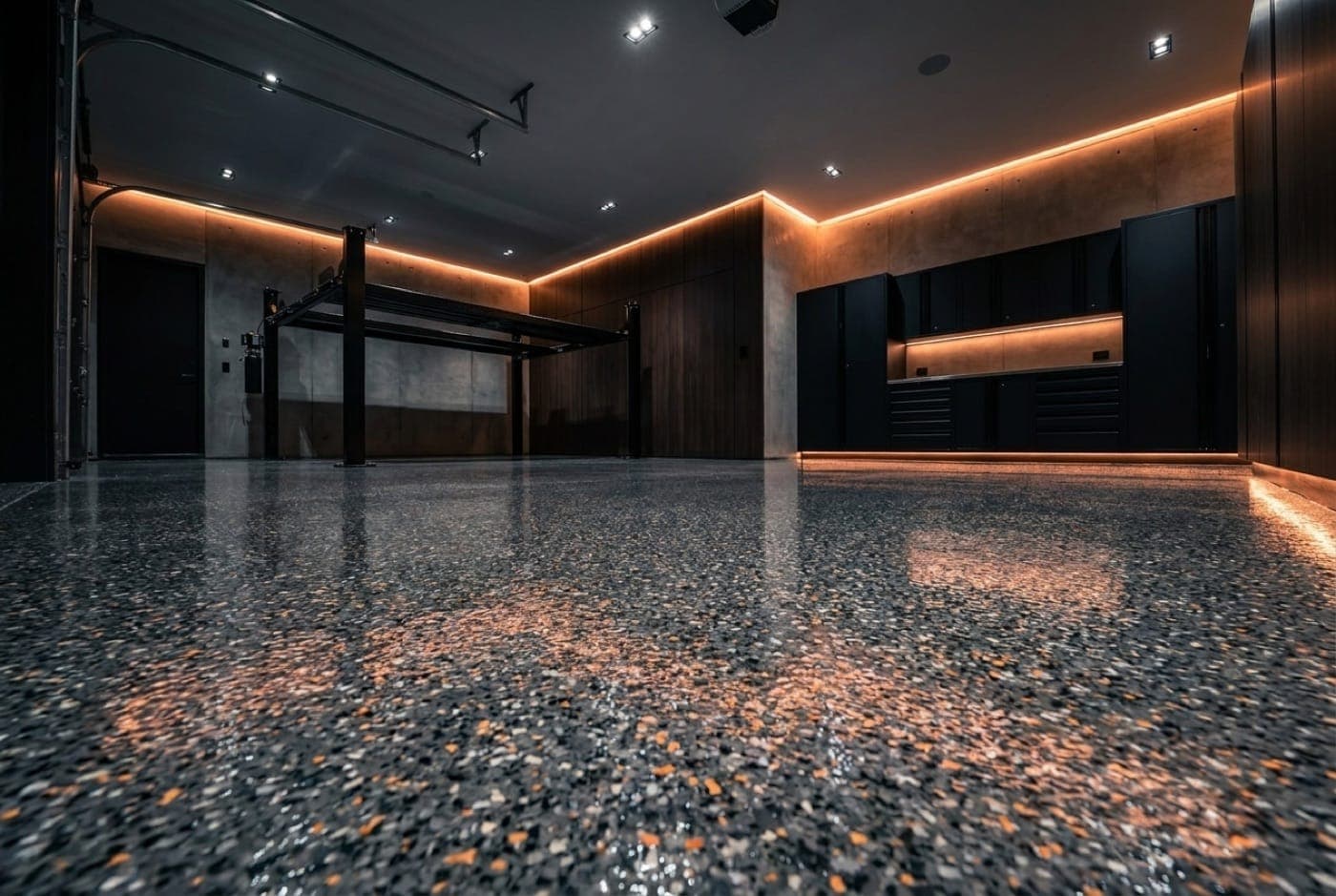
A properly installed garage epoxy floor can handle freeze-thaw cycles, road salt, and the weight of vehicles for 10 to 20 years, depending on how it's used and maintained. The key is proper concrete preparation and a polyaspartic finish applied the right way, no shortcuts, no subcontracting.
Why Quebec garages wear out floors faster
A garage in Quebec City, Lévis, or Saint-Georges has nothing in common with one in Florida. Winter here brings more than 100 freeze-thaw cycles a year, and every time your car pulls in with snow and salt clinging underneath, the floor under the tires takes a hit. Bare concrete cracks, paint peels, and a poorly prepped coating flakes off in patches after just a few winters.
That's exactly what road salt does to a floor: it attacks surface coatings that aren't built for that kind of repeated exposure. A professional epoxy system, properly prepped and properly applied, handles it without issue. That's why we don't just "paint" your floor, we prep it so it actually holds up.
The 3 finishes we install, and which one fits your garage
We work with three systems, each one has its place:
- Vinyl flake: the most popular choice for residential garages. It hides minor imperfections well and stands up to everyday wear.
- Hand-poured metallic: a striking visual finish, often chosen for garages people want to show off or for commercial spaces.
- Double-broadcast quartz: the toughest of the three, built for spaces that take a real beating, workshop garages, warehouses, industrial areas.
For a standard residential garage, vinyl flake and double-broadcast quartz are the two options we recommend most often. The final choice comes down to how you use your garage and the look you're after.
How we prep the surface, and why it changes everything
Concrete preparation is what determines whether your floor lasts 15 years or starts lifting after two winters. Quebec-based flooring specialists estimate that prep work accounts for roughly 80% of a coating's overall lifespan. That's huge, and it's why we never skip this step.
Everything is done with our own crew, from diamond grinding to the final polyaspartic finish. Diamond grinding opens up the pores of the concrete so the epoxy actually bonds into the surface instead of just sitting on top of it. That's the difference between a floor that sticks for good and one that starts peeling near the door frame after a year.
How long it actually lasts
How long an epoxy floor lasts depends a lot on where it's installed:
- In a typical unheated residential garage in Quebec, a properly installed professional system generally lasts between 10 and 15 years.
- In a heated basement, where there's no salt or freeze-thaw exposure, the lifespan often climbs to between 15 and 25 years.
- In commercial or industrial use with heavy traffic, a realistic range is more like 5 to 10 years, though high-quality systems can outlast that.
That's exactly why we back our floors with a 10-year warranty. We know what our work is worth because we control every step, from prep to final finish.
What affects the price of a garage epoxy floor
We won't throw out a random number here, because the price of an epoxy floor depends on several concrete factors specific to your garage:
- The current state of the concrete: cracks that need repair, moisture issues, an old coating that needs stripping.
- The total surface area to be covered.
- The finish you choose: vinyl flake, metallic, or double-broadcast quartz all require different amounts of material.
- The prep work required: a longer grinding process for a damaged surface takes more crew time.
The only way to get a real, accurate price for your garage is to let us take a look at the surface. Get a quote and we'll get back to you with a price that actually matches your project, not a generic estimate.
Maintenance to keep your floor looking new
A well-done epoxy floor doesn't need much, but a little upkeep makes a big difference over time. Sweep regularly to keep gravel from scratching the surface, and rinse off any accumulated salt after the winter months instead of letting it sit and dry on the floor. Avoid leaving undiluted harsh chemicals sitting in puddles for too long, especially around spots where the car is parked.
Simple, regular maintenance, combined with a properly done installation, is what lets a garage epoxy floor deliver on its promise for 10, 15, sometimes 20 years.
Frequently asked questions
What are the downsides of an epoxy floor?
The main risk is lifting or cracking if the concrete prep wasn't done properly from the start. That's why we handle everything ourselves, from diamond grinding to the final finish, without subcontracting any step. Done right, a garage epoxy floor doesn't run into this issue and lasts for many years.
What does an epoxy floor cost for a garage?
The cost varies based on the condition of the concrete, the size of the garage, the finish chosen, and the prep work required. There's no universal price that applies to every garage, each project is different. The best way to know the real cost for your garage is to request a quote.
What's the best floor coating for a garage?
For a residential garage in Quebec, vinyl flake and double-broadcast quartz are the finishes best suited to freeze-thaw cycles and road salt. Double-broadcast quartz works particularly well if the garage also doubles as a workshop or sees heavy use. The final choice depends on your specific needs and the look you're going for.
What's the price of an epoxy resin floor for a garage?
The price depends on the surface area, the finish chosen, the current condition of the floor, and the prep work needed before application. These factors vary from one garage to the next, so no generic price would be honest. Request a quote to get a price based on your actual garage.
How long does a garage epoxy floor last in Quebec?
In an unheated residential garage, a properly installed professional system generally lasts between 10 and 15 years, accounting for freeze-thaw cycles and salt exposure. In a heated basement, the lifespan can climb to between 15 and 25 years. Regular maintenance and the quality of the initial prep work directly affect this longevity.