
Floor Installation in Quebec City: Work Done Right
September 16, 2026 · 3 min read
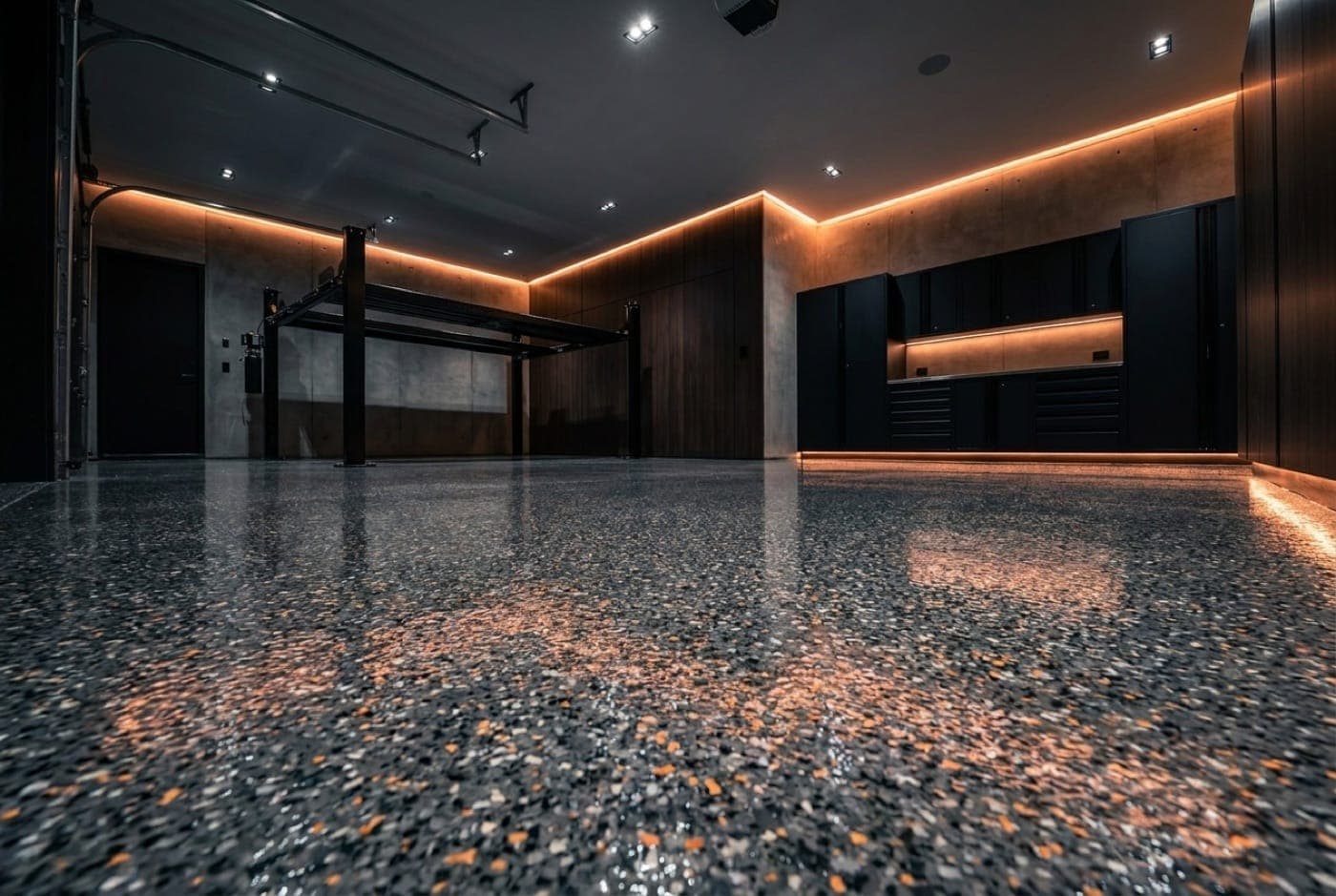
A floor installation in Quebec City that lasts starts with proper concrete preparation, a finish suited to the intended use (flakes, metallic, or quartz), and a team that does all the work itself, from diamond grinding to the polyaspartic topcoat. Request a quote to find out your options for your garage, basement, business, or workshop.
Why concrete preparation changes everything
An epoxy floor that peels or cracks is almost always a preparation problem, not a product problem. The concrete needs to be opened up with a diamond grinder to create a surface that truly bonds, not just cleaned on the surface. In Quebec City as in Lévis, Beaupré, or Portneuf, temperature and humidity swings between summer and winter put coatings to the test. A poorly prepared floor will move with these conditions. A properly prepared floor absorbs these variations without any issue.
At Époxy Québec Pro, every step of preparation and installation is done by the team, with no subcontracting. That means there's no disconnect between the person grinding the concrete and the person applying the final finish. The same standard applies from start to finish.
The three finishes offered and how to choose
The choice of finish mostly depends on how the floor will be used and the look you're going for.
- Vinyl flakes: good for garages, basements, and commercial spaces looking for a textured, durable finish, with several colour combinations available.
- Hand-poured metallic: a more visual finish, often chosen for residential or commercial spaces where appearance matters as much as durability.
- Double-broadcast quartz: designed for surfaces that need to withstand heavy use, such as workshops or certain high-traffic commercial spaces.
The right choice depends on the square footage, the current condition of the concrete, and the budget. That's exactly the kind of question to bring up when requesting a quote, so we can look at your specific project before suggesting a finish.
How a properly done installation unfolds
A serious installation always follows the same order, no matter the size of the project.
1. Concrete inspection: checking the surface condition, existing cracks, and any signs of moisture. 2. Diamond grinding: opening up the concrete to prepare a real bond, not just a surface cleaning. 3. Repairing defects: filling cracks and damaged areas before applying anything. 4. Applying the chosen finish: flakes, metallic, or quartz, depending on what was agreed on. 5. Polyaspartic topcoat: the finishing layer that protects everything and gives the floor its long-term durability.
Skipping a step is what causes most of the problems seen on poorly done floors elsewhere: peeling, bubbling, premature wear.
Matching the floor to its use: residential, commercial, or industrial
A residential basement floor doesn't have the same needs as a warehouse floor that sees forklifts rolling across it all day long. A garage needs to withstand salt, oil, and temperature swings. A workshop needs a finish that can handle dropped tools and chemical products.
Époxy Québec Pro works throughout the Quebec City, Lévis, Beauce, Beaupré, and Portneuf areas, on residential, commercial, and industrial projects alike. The finish and system thickness are adjusted based on what the floor will actually go through, not according to a one-size-fits-all formula.
Warranty and maintenance: what makes a floor last
A floor with a 10-year warranty relies on two things: proper preparation from the start, and simple but regular maintenance afterward. Frequent sweeping to remove sand and gravel, occasional damp cleaning without abrasive products, and avoiding letting water or chemicals sit for too long. These are simple habits, but they make a real difference in how long the finish lasts.
If your current floor is already showing signs of cracking or peeling, it's worth having the situation assessed before it gets worse. A quote will let you know exactly what needs to be done to start fresh on solid ground.
FAQ
Frequently asked questions
What is the price of a floor installation in Quebec City?
The price varies depending on the condition of the concrete, the square footage to cover, the chosen finish (flakes, metallic, or quartz), and the amount of preparation work required. There's no fixed rate that applies to every project, the best way to find out where you stand is to request a quote with the details of your space.
How does an epoxy floor installation work?
The process starts with a concrete inspection, followed by diamond grinding to create proper adhesion, repairing any defects, applying the chosen finish, and finally a polyaspartic topcoat to protect everything. Every step matters, skipping one increases the risk of peeling or cracking down the road.
How long does it take to install an epoxy floor in a garage?
The time depends on the square footage, the condition of the concrete, and the finish chosen, some projects require more preparation than others. This is a detail that gets clarified during the project assessment, not before.
Does epoxy flooring work well in a damp basement?
A properly prepared floor, with adequate concrete grinding and a suitable finish, is designed to handle the normal humidity variations of a basement. That's exactly why concrete preparation is the most important step before applying any finish.
Is the work done by the company itself or subcontracted out?
At Époxy Québec Pro, every step, from concrete preparation to the application of the final finish, is carried out by the company's own team, with no subcontracting. This allows for consistent quality control of the work from start to finish.