
Flake Epoxy Flooring: Maintenance and Wear Resistance
July 23, 2026 · 4 min read
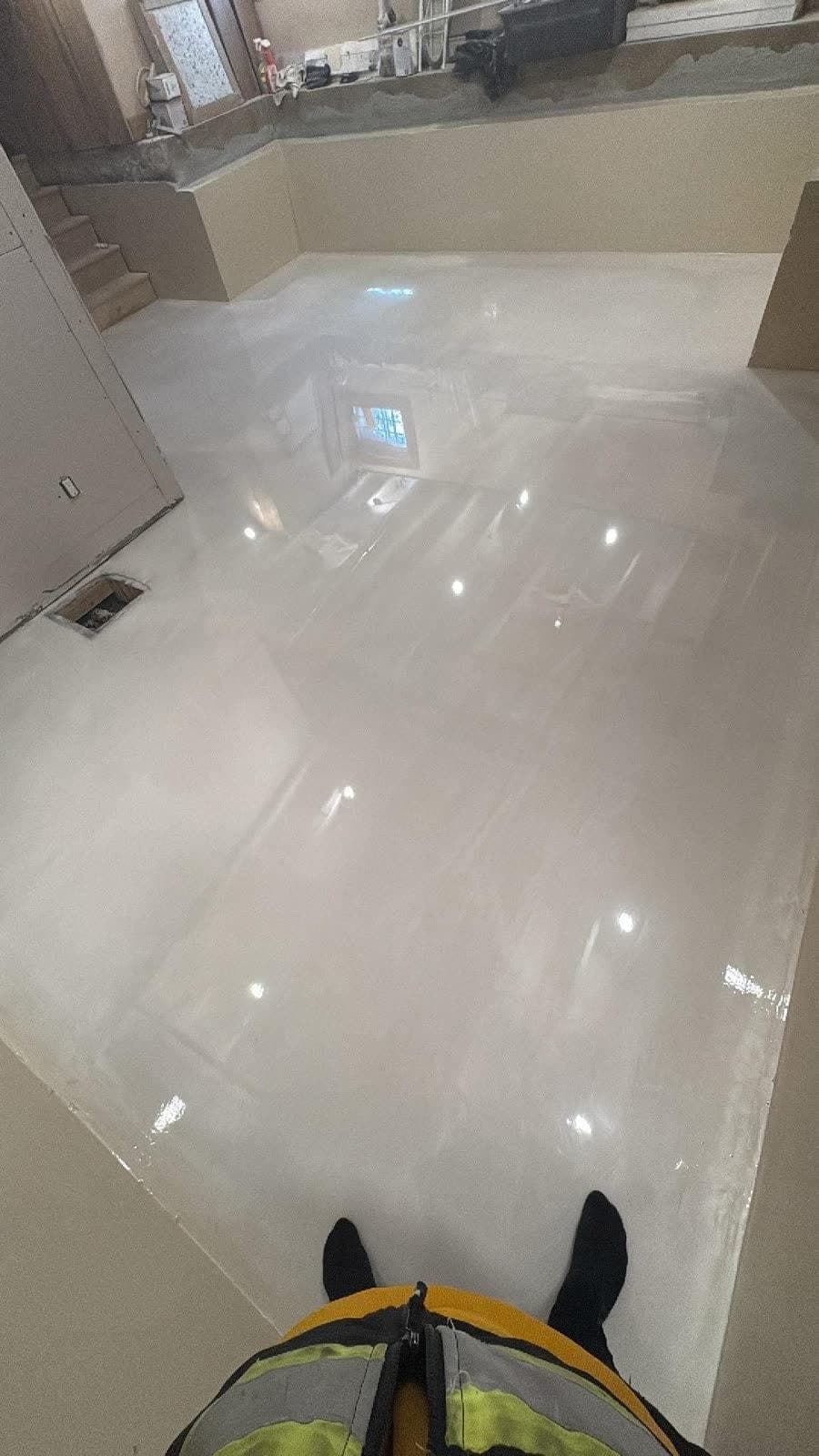
A properly installed flake epoxy floor needs very little upkeep: regular sweeping and washing with lukewarm water and mild soap are enough. Its wear resistance comes from the combination of vinyl flakes and a tough topcoat, which protects against abrasion, stains, and liquids. Well maintained, it lasts for years without peeling or chipping.
What makes a flake epoxy floor durable
The floor isn't just a layer of coloured paint. It's a multi-step system: slab preparation, diamond grinding to create a surface profile for adhesion, epoxy application, broadcasting the vinyl flakes, then a protective topcoat.
At Époxy Québec Pro, that final layer is polyaspartic. That's what gives the floor its real wear resistance: abrasion, scratches, mild chemicals. The flakes add texture and colour, but it's the topcoat that absorbs daily traffic.
A floor with strong wear resistance is especially useful in:
- Garages with vehicle traffic
- Basements used for storage
- Retail spaces with heavy foot traffic
- Workshops and small warehouses
Epoxy coatings are known to perform well in high foot-traffic areas, precisely because they require so little routine maintenance while still standing up to abrasion.
Day-to-day maintenance: what you actually need to do
Maintaining a flake epoxy floor stays simple if you follow a few basic habits:
- Sweep or vacuum regularly to remove sand and abrasive dust
- Wash with a mild, pH-neutral cleaner, no need for expensive specialty products
- Wipe up liquids as soon as possible, especially in a garage
- No wax is needed to keep the topcoat's shine
One point that's often misunderstood: vinegar, citrus cleaners, and ammonia might seem harmless, but they break down the resin over time. These are products to avoid even if they're labelled natural or "eco-friendly."
What to avoid to keep the topcoat from wearing out faster
Automotive fluids
Brake fluid and hydraulic oil are particularly harsh. If a spill happens in your garage, wipe it up within 24 hours. Prolonged contact can soften the topcoat, even on a good system.
Heavy objects dragged across the floor
Dragging a workbench, tool stand, or heavy bin can scratch the surface. Use furniture pads or lift the object instead of sliding it.
Sand and gravel
These are the worst silent enemies. They act like sandpaper under tires or feet. Frequent sweeping easily solves the problem.
Real lifespan of a flake epoxy floor
The lifespan of an epoxy floor varies a lot depending on use. In residential settings, with light traffic and good upkeep, a properly installed system can last between 15 and 20 years. In industrial settings with heavy traffic or chemical exposure, the range is shorter, often around 5 to 10 years, unless maintenance is more rigorous.
That's why initial prep work matters just as much as the finished product. A poorly prepared floor, without proper diamond grinding of the slab, will peel or crack well before its normal lifespan, no matter how good the epoxy is.
That's also why Époxy Québec Pro backs its floors with a 10-year warranty: because the work is done right, from diamond grinding to the polyaspartic topcoat, with no subcontracting.
Cure time affects final durability
An epoxy floor doesn't reach full strength right away. A good portion of the hardness sets in within the first 12 hours, but full durability generally takes about 7 days. That's why you should avoid heavy loads or washing the floor too soon after installation.
Respecting this timeline isn't just a formality. It's what ensures the floor really holds up over the long run, without premature marks.
What affects the price of a flake epoxy floor
The price varies based on several concrete factors:
- The current condition of the slab (cracks, moisture, old coating to remove)
- The total area to cover
- The finish chosen (vinyl flakes, hand-poured metallic, or double-broadcast quartz)
- The amount of prep work needed before application
Every project is different, so the best way to find out what it'll cost for your garage, basement, or business is to request a detailed quote with a surface inspection.
Why choose a floor done right
A flake epoxy floor that lasts isn't something you improvise. Slab prep, product choice, and respecting cure times make all the difference between a floor that holds up for 15 years and one that peels after two winters.
If you're in Quebec City, Lévis, Saint-Georges, Beaupré, or Portneuf and want a solid floor, done by a team that handles everything from A to Z with no subcontracting, request your free quote today.
Related reading:
Frequently asked questions
Do you need wax to maintain a flake epoxy floor?
No, it's not necessary. Regular washing with a mild, pH-neutral cleaner is enough to keep the topcoat's shine and protection intact. Époxy Québec Pro offers vinyl flake epoxy flooring service.
How long does a vinyl flake epoxy floor last?
In a residential setting with normal upkeep, a properly installed floor can last between 15 and 20 years. In industrial settings with heavy traffic, the lifespan is often shorter depending on use.
What household products should you avoid on an epoxy floor?
Avoid vinegar, citrus cleaners, and ammonia. These products seem mild but break down the resin over time and speed up wear on the topcoat. Époxy Québec Pro also offers quartz epoxy flooring.
Does a flake epoxy floor hold up well in a garage?
Yes, that's exactly the kind of use this system is designed for. You just need to wipe up automotive fluids like oil or brake fluid within 24 hours to prevent the topcoat from softening.
How long before you can walk on a new epoxy floor?
A good portion of the hardness sets in after 12 hours, but full durability takes about 7 days. It's best to avoid heavy loads and washing during this period.
Areas mentioned in this article