
Basement Epoxy Flooring in Quebec City: What Really Drives the Price
July 14, 2026 · 4 min read
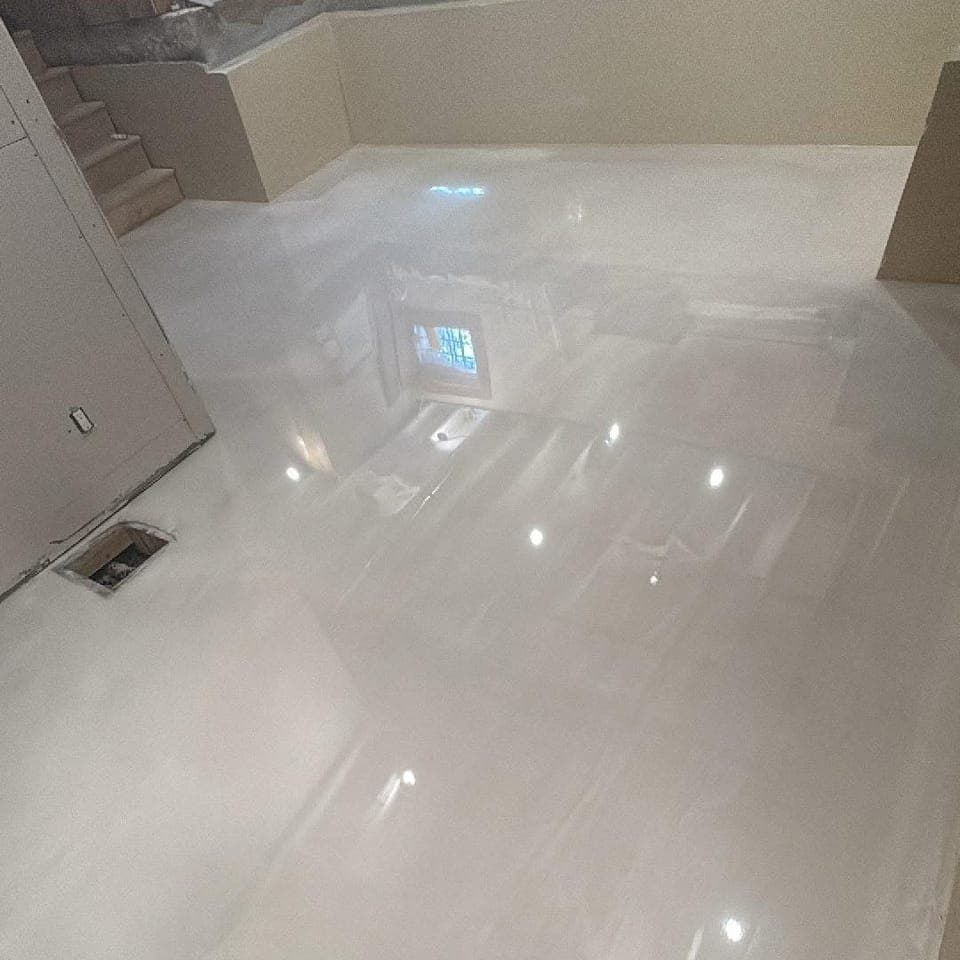
The price of a basement epoxy floor in Quebec City depends on the condition of the concrete, the surface area, and the finish you choose (vinyl flakes, metallic, or double-broadcast quartz). There's no fixed price per square foot, every basement needs its own kind of prep work. The best way to know your exact price is to get a custom quote.
What Really Drives the Price of a Basement Epoxy Floor
A basement epoxy floor doesn't come with a standard price per square foot, even though a lot of people go looking for that number. Here are the real factors that move the price:
- Surface condition: cracked concrete, moisture coming up from below, or an old coating that needs to be stripped all require more prep work than a clean, dry slab.
- Total surface area: the more square footage to cover, the higher the total cost, though the price per square foot often comes down a bit.
- Finish chosen: vinyl flakes, hand-poured metallic, or double-broadcast quartz don't cost the same in materials or take the same time to install.
- Access to the basement: a narrow staircase, a single door, or a space that's hard to ventilate can add time to the job.
That's why a basement epoxy floor price quoted over the phone, without anyone seeing the surface, is always just a rough guess. The right way to do it is a site visit or clear photos, followed by a detailed quote that accounts for your actual basement.
The Three Finishes and How They Affect Your Budget
Vinyl Flakes
This is the most popular finish for a residential basement epoxy floor. It gives a uniform look, hides small imperfections in the concrete well, and offers a solid balance between durability and cost.
Hand-Poured Metallic
Every metallic floor is unique, hand-poured, with movement effects built into the colour. This finish takes more time and skill to apply, which shows up in the price.
Double-Broadcast Quartz
Built for basements that also double as a workshop or heavy storage space. The double-broadcast quartz gives you a slip-resistant surface that holds up extremely well to wear, a solid choice when the basement isn't just a rec room.
Why Basements Need Special Prep Work
A basement isn't a garage. The concrete is often younger, damper, and sometimes poured without a proper vapour barrier. Before anything gets poured, we do diamond grinding to open up the concrete, remove the laitance, and create a clean surface the epoxy can actually bond to.
This step is what prevents peeling and bubbling down the road. We finish with a polyaspartic topcoat, which cures fast and holds up well against the residual moisture that's typical of a Quebec basement. All of this is done by our own crew, no subcontracting, start to finish.
Basement Epoxy Flooring vs. Other Coverings
When it comes time to choose a basement floor covering, the usual options are ceramic tile, sheet vinyl, carpet, or just painted concrete. Each one has its limits:
- Ceramic tile can crack if the slab shifts even slightly.
- Carpet traps moisture and isn't ideal if you ever get water damage.
- Painted concrete chips and wears down over time and traffic.
A basement epoxy floor, properly prepped and properly installed, gives you a seamless, waterproof surface that's easy to clean. It's a choice that holds up over the years when the work is done right, with real concrete prep and a finish suited to how the basement is actually used.
How to Get an Exact Price for Your Basement
The only reliable way to know your price is to have your surface assessed. We look at the condition of the concrete, the square footage, the intended use (family room, workshop, storage), and the finish that fits your needs. From there, you get a clear quote, no surprises.
If you're in Quebec City, Lévis, Saint-Georges, Beaupré, or Portneuf and you want a floor that won't peel or crack a few years down the road, request your quote here and let's take a look at your project together.
Related reading:
Frequently asked questions
What does a basement epoxy floor cost?
The cost depends on the condition of the concrete, the surface area, and the finish you choose (vinyl flakes, metallic, or double-broadcast quartz). There's no fixed rate per square foot, every basement needs its own assessment. The most reliable way to know your price is to request a detailed quote.
Is epoxy a good choice for a basement floor?
Yes, as long as the concrete is properly prepped before application. Epoxy creates a seamless, waterproof surface that's easy to clean, which suits the moisture levels typical of a Quebec basement well. A polyaspartic topcoat also helps it better resist that residual moisture. Époxy Québec Pro offers residential garage epoxy.
What are the downsides of an epoxy floor?
If the concrete prep is rushed or skipped, the epoxy can peel or bubble over time. That's why diamond grinding and moisture treatment are essential before installation. When it's done right, this risk becomes minimal.
What's the best flooring option for a basement?
The best choice depends on how the space is used: for a living area, vinyl flakes or metallic give a great finish and solid durability. For a workshop or heavy storage, double-broadcast quartz offers more resistance to wear. Either way, epoxy holds up better than carpet or painted concrete when it comes to moisture.
Does the concrete need to be repaired before installing a basement epoxy floor?
Yes, any cracks or damaged areas need to be addressed before application. Diamond grinding also lets us check the real condition of the concrete beneath the surface. This step is part of standard prep work, it's not optional if you want a floor that lasts. Époxy Québec Pro also offers quartz epoxy flooring.
Areas mentioned in this article