
Epoxy Kitchen Floor: Good Idea and Real Price
July 14, 2026 · 4 min read
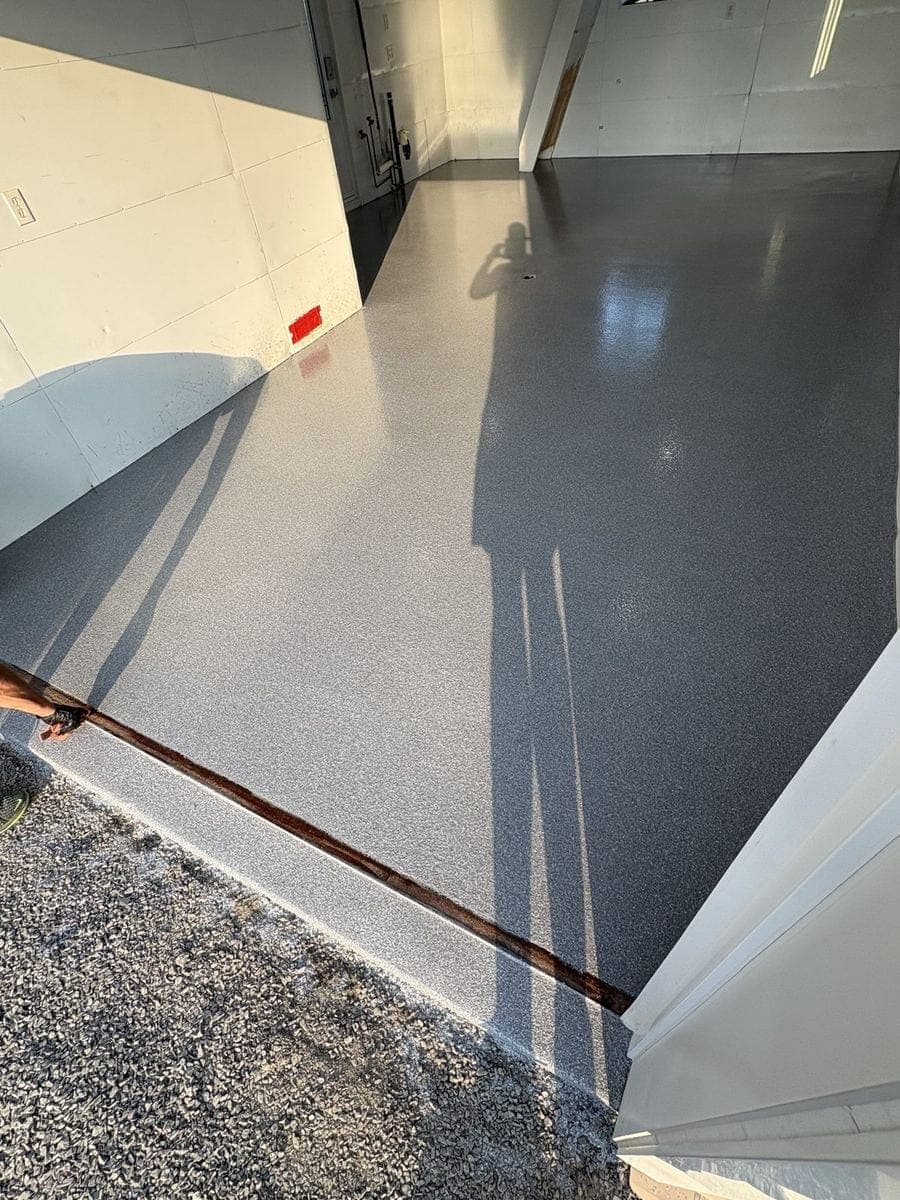
An epoxy kitchen floor is a good idea when the surface is properly prepped and the finish well chosen: it's tough, easy to clean, and has no seams for dirt to collect in. The price of an epoxy kitchen floor depends on the square footage, the condition of the existing concrete, and the finish you choose. There's no such thing as a fixed price without seeing the surface first.
Is an epoxy kitchen floor a good idea?
In a kitchen, epoxy flooring has real advantages. It's seamless, so nothing seeps between tiles. It holds up well to impacts, chair scratches, and liquid spills. With a polyaspartic finish, it dries fast and is ready to walk on again quickly.
The key thing to understand is that epoxy goes on concrete, not on wood or plywood that hasn't been properly prepared. If your kitchen sits at ground level or on a concrete slab, it's a great fit. If it's a hardwood floor or a standard subfloor on an upper level, the structure needs to be assessed before moving forward.
As for comfort, epoxy is harder and colder underfoot than a floating floor. Some clients add a mat in their work area to make up for it. That's a detail to plan for, not a flaw in the product.
The downsides of an epoxy floor
Before saying yes, you need to know the product's limits. Here's what we always walk our clients through:
- Hard surface: standing for long periods can be more tiring than on a floating floor or soft vinyl.
- Sensitive to prep work: if the concrete isn't properly ground and moisture isn't controlled, epoxy can lift. This is the number one cause of bad experiences.
- Imperfect spot repairs: a deep gouge can mark the finish, and a touch-up repair never blends perfectly into an already installed floor.
- Not a long-term DIY project: hardware store kits rarely last more than two or three years, unlike a properly applied professional system.
These downsides aren't reasons to avoid epoxy. They're reasons to have it installed by a team that knows every step, from diamond grinding to the final coat.
What affects the price of an epoxy floor
There's no generic price because every project starts from a different baseline. Here are the factors that push the bill up or down:
- The condition of the concrete: cracks, old layers of paint or epoxy to strip, moisture issues. The more prep work needed, the more time it takes.
- The total square footage: a small kitchen costs proportionally more per square foot than a large basement, because of the fixed time needed for prep and setup.
- The finish chosen: vinyl flakes, hand-poured metallic, or double-broadcast quartz. Each finish has its own application process.
- Site access and conditions: narrow stairways, furniture to move, limited ventilation.
That's why we never quote a number blindly over the phone. We look at the surface, ask the right questions, then give you a real price that matches your project, not some general average.
Epoxy floor price per square foot: why this number is often misleading
A lot of people search for an epoxy floor price per square foot because it seems simple to compare. The problem is that this number hides a lot of variables. An epoxy garage floor price per square foot is never comparable to an epoxy kitchen floor price, even with the same square footage, because the prep work, access, and sometimes the finish chosen are completely different.
The only reliable way to get an accurate number is to have your surface assessed. Request your quote and we'll give you a price based on your actual project, not a generic estimate found online.
Kitchen, basement, or garage: same basics, different needs
Whether it's an epoxy basement floor, epoxy basement flooring in a family room, or a kitchen floor, the technical foundation stays the same. It all starts with diamond grinding to open the pores of the concrete, followed by moisture control and a polyaspartic finish coat suited to the intended use.
A basement often has more square footage but fewer everyday traffic constraints. A kitchen has less surface area but more foot traffic, heat, and contact with water and grease. That's why the recommended finish can vary from one room to another, even within the same house.
Why prep work makes all the difference
An epoxy floor that lifts or chips after a year or two is almost always a prep work issue, not a problem with the product itself. At our shop, everything is done in-house, from grinding to the final finish, with no subcontracting. That's what lets us back our work with a 10-year guarantee.
If you're in Quebec City, Lévis, Saint-Georges, Beaupré, or Portneuf and thinking about an epoxy floor for your kitchen, basement, or garage, get a free quote and we'll take a look at your surface to tell you exactly what to plan for.
Related reading:
Frequently asked questions
What are the downsides of an epoxy floor?
Epoxy is a hard surface, so it can be more tiring to stand on for long periods, and a spot repair never blends perfectly into an already installed floor. The main risk comes from poorly prepped concrete, which can cause lifting over time if the work isn't done properly.
Is epoxy flooring suitable for a kitchen?
Yes, as long as it's installed on a properly prepped concrete slab. It holds up well to impacts and liquids, and has no seams where dirt can collect. Époxy Québec Pro offers residential garage epoxy.
What's the price of an epoxy floor?
There's no fixed price: it depends on the condition of the concrete, the square footage, and the finish you choose, whether that's vinyl flakes, metallic, or double-broadcast quartz. The only way to get a real number is to request a quote from Époxy Québec Pro after your surface is assessed.
What's the price of an epoxy floor per square foot?
The price per square foot varies a lot depending on the prep work needed and the total square footage, with smaller spaces often costing more per square foot than larger ones. That's why we avoid giving a generic number without seeing the floor first.
How long does an epoxy floor last in a kitchen?
When properly installed, with a suitable polyaspartic finish and adequate concrete prep, an epoxy floor is built to last for years without lifting or cracking. That's why Époxy Québec Pro backs its floors with a 10-year guarantee.
Areas mentioned in this article