
Concrete Prep Before Epoxy: Why Diamond Grinding Is Essential
July 22, 2026 · 4 min read
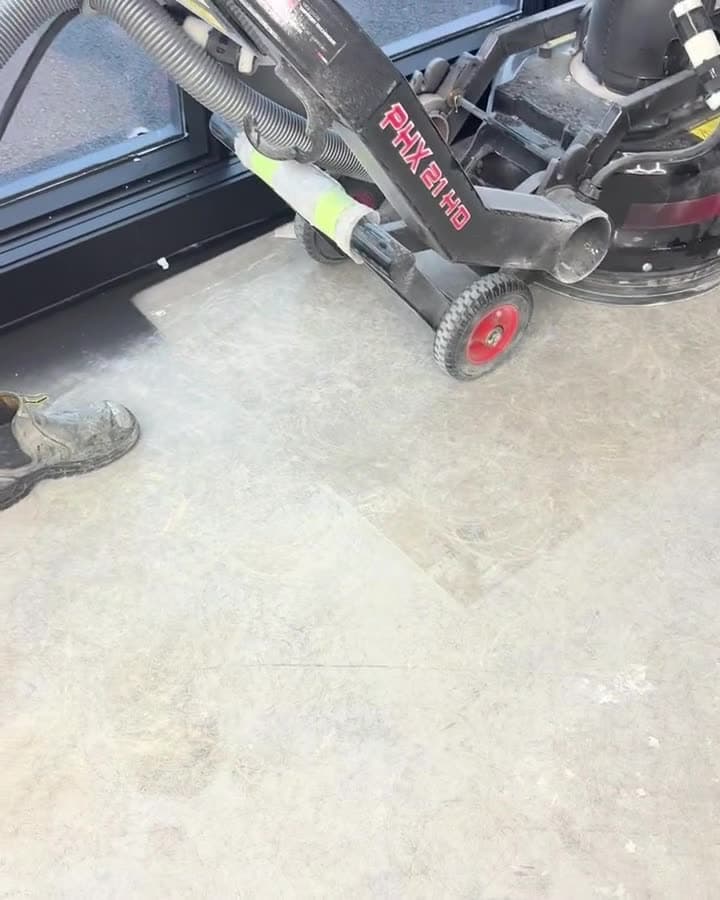
Concrete prep before epoxy is the step that decides whether your floor lasts 10 years or starts peeling within months. Diamond grinding opens up the pores of the concrete, removes laitance, and creates a rough surface where the epoxy can actually anchor itself. Skip this step, and even the best product on the market won't bond properly.
Why Concrete Needs Real Prep Work
Concrete isn't a surface that's ready to receive a coating right after it's poured. It has a thin, dense surface film called laitance that stops epoxy from penetrating. On new concrete, prep guidelines recommend waiting somewhere between 28 days and two months before applying any resin, giving the concrete time to fully cure and release its internal moisture.
On existing concrete, the issue is different: years of oil, dust, sealer, or paint have built up on the surface. These contaminants create an invisible barrier between the concrete and the epoxy. No matter the age of the floor, the surface needs to be brought back to a neutral, porous state before any coating goes on.
Diamond Grinding: The Step That Changes Everything
Diamond grinding uses abrasive discs mounted on a professional grinder to remove the top layer of concrete and expose the aggregate underneath. That slightly rough texture is what gives the epoxy something to grip onto mechanically, not just chemically.
At Époxy Québec Pro, every floor goes through this grinding process before any other step, no matter which finish is chosen (vinyl flake, hand-poured metallic, or double-broadcast quartz). Our own crew does this work directly, from grinding right through to the polyaspartic finish, with no subcontracting. We control every step because it's the only way to guarantee a result that actually holds up over time.
Grinding also reveals what dust and dirt were hiding: hairline cracks, low spots, spalling, or holes. These defects need to be addressed before application, otherwise they'll show through the finish once the epoxy is poured.
Concrete Moisture: A Factor You Can't Ignore
Concrete is porous and acts like a sponge. If it holds too much moisture at the time of application, that moisture gets trapped under the epoxy and causes bubbling, blistering, and eventually peeling. Some technical sources set the threshold around 4% residual moisture in the substrate for a reliable result.
A simple test, commonly used in the trade, involves taping a sheet of plastic to the concrete for 24 hours. If condensation or droplets form underneath, the concrete is too damp to receive a coating. This matters a lot for basements and garages in the Quebec City area, where freeze-thaw cycles and de-icing salt cause concrete moisture levels to shift from one season to the next.
What Happens If You Skip This Step
An epoxy floor applied over poorly prepped concrete might look fine for the first few weeks. The problem shows up later: bubbles rise to the surface, sections peel away at the joints, or the finish flakes off near car tires or equipment. These issues can't be fixed with an extra coat. Often, the whole thing needs to be stripped and redone, this time with real prep work.
That's why concrete prep before epoxy isn't an optional step you skip to save time. It's the foundation of the whole job. A floor backed by a 10-year warranty always starts with grinding done the right way.
What Affects the Price of Concrete Prep
The cost of a project depends on several concrete factors: the current condition of the concrete (cracks, contamination, old coating that needs removal), the total area to be treated, the finish chosen, and the level of prep needed to fix defects before application. A residential garage with concrete in good shape doesn't require the same prep work as an industrial warehouse floor stained with 20 years of oil.
The only way to get an accurate price is to have your concrete looked at in person. You can request a free quote so we can assess the condition of your surface and explain exactly what your project needs.
Our Approach in Quebec City, Lévis, Saint-Georges, and Beaupré
Whether it's a residential garage, a commercial floor, or an industrial workshop, prep work stays the top priority. We grind, treat cracks, check moisture levels, then apply the chosen finish. Our whole team handles the work themselves, with no subcontractors, to guarantee consistent results from one project to the next.
If your current floor is showing signs of peeling, or if you're planning a new project, request your quote and we'll assess what needs to be done before we even talk about finishes.
Related reading:
Frequently asked questions
How long should you wait before applying epoxy on new concrete?
Freshly poured concrete generally needs to cure for somewhere between 28 days and two months before it can receive an epoxy coating. This waiting period lets the concrete release its internal moisture and reach enough stability. Époxy Québec Pro offers residential garage epoxy.
Why is diamond grinding necessary even on concrete that's in good condition?
Concrete always has a dense surface layer called laitance that stops epoxy from bonding properly. Grinding removes this layer and opens up the pores of the concrete to create real mechanical adhesion.
How can I tell if my concrete is too damp for epoxy?
A simple test involves taping a sheet of plastic to the concrete for 24 hours and checking for condensation underneath. If moisture forms, the concrete has too much moisture and needs to dry out further before application. Époxy Québec Pro offers quartz epoxy flooring.
What happens if epoxy is applied without proper prep?
The result may look fine at first, but bubbling, blistering, and peeling eventually show up, often within a few weeks or months. The only fix is to remove the coating entirely and redo the prep work properly.
Is prep work different for a residential garage versus an industrial floor?
According to Époxy Québec Pro, the principle stays the same, but the scope of work changes depending on the contamination and condition of the concrete. An industrial floor with years of built-up oil stains usually needs more intensive grinding than a standard residential garage.
Areas mentioned in this article