
Residential Epoxy Installation in Quebec City: What You Need to Know
September 25, 2026 · 3 min read
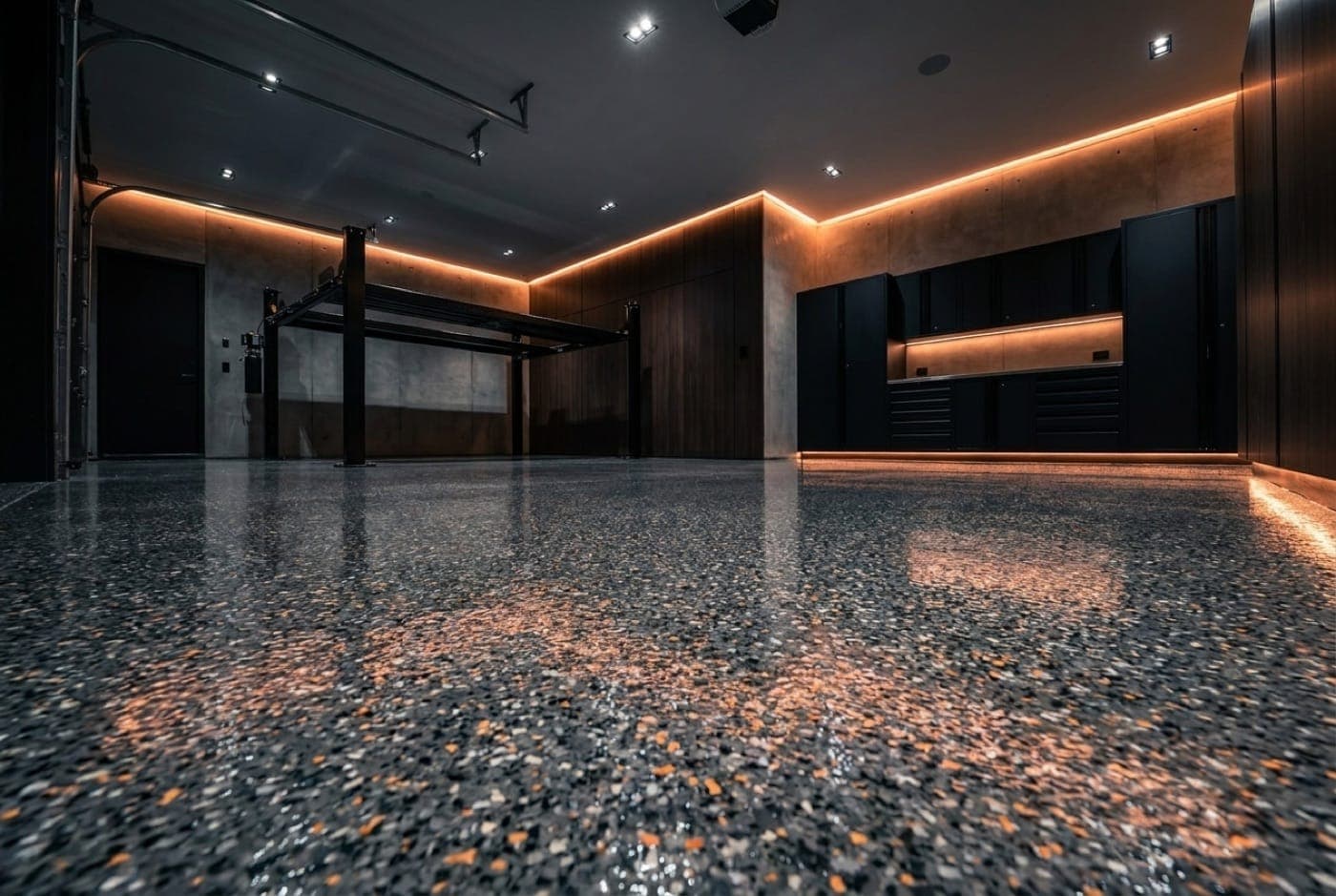
A well-done residential epoxy installation in Quebec City starts with concrete prep, not colour choice. At Époxy Québec Pro, every floor (garage, basement, patio) is diamond-ground then finished in flake, metallic or quartz epoxy flooring, with epoxy quartz applied in a double coat to withstand daily use in the Quebec City area.
Quartz epoxy flooring in Quebec City: why this finish changes the game
Quartz epoxy flooring is often the go-to choice for people who want a durable finish without sacrificing looks. It's a double-broadcast system: a first coat of epoxy quartz saturates the coloured quartz grain, then a second coat seals everything in. The result is a textured, slip-resistant, dense surface that holds up well to frequent traffic in a garage or basement.
In Quebec City, with de-icing salt, freeze and thaw cycles, a properly prepped substrate makes all the difference. A quartz floor installed over damp or poorly ground concrete will peel or crack, no matter how good the epoxy itself is.
The three residential finishes: flake, metallic, quartz
Each finish answers a different need.
- Vinyl flake: mottled look, good balance of durability and cost, popular for residential garages and basements.
- Hand-poured metallic: unique marbled effect, every floor is different, often chosen for a main-floor space, a rec room or a commercial space that wants to stand out.
- Double-broadcast quartz: the densest of the three, often recommended for high-traffic areas like a year-round garage.
The right choice depends on how the room is actually used, not just on the look you want.
Steps of a residential installation done right
A serious residential installation always follows the same order, no matter which finish you pick:
1. Inspection of the existing concrete: cracks, moisture, old coatings. 2. Diamond grinding to open up the surface and remove any residue or sealer. 3. Repair of cracks and joints before application. 4. Application of the epoxy coats (base, chosen finish, polyaspartic topcoat). 5. Cure time before putting the floor back into service.
At Époxy Québec Pro, these steps are handled by the same crew from start to finish, with no subcontracting. That avoids grey areas between a prep crew and an applicator who never talk to each other.
What makes the price of a residential epoxy floor vary
There's no universal rate for an epoxy floor, and no one should give you one without having seen your substrate first. Here's what actually drives the cost of a project:
- The current state of the concrete: a cracked or oil-contaminated floor needs more prep work.
- Total surface area: a double garage naturally costs more than a small utility room.
- The finish chosen: flake, metallic and quartz don't have the same application complexity.
- The level of prep required: light grinding versus full stripping of an old coating.
The only way to get a reliable number is to have your space assessed. You can request a quote for your garage, basement or patio and get a clear picture before deciding.
Maintenance and realistic lifespan
A properly installed epoxy floor needs very little upkeep: sweeping, a damp mop, and avoiding harsh abrasive products. Époxy Québec Pro's 10-year warranty covers work done to spec, but actual lifespan also depends on how the floor is used. A garage exposed to salt and gravel will show wear differently than a dry residential basement.
There's no universal, guaranteed number for "how long it lasts" that applies to every epoxy floor everywhere. What's true is that a well-prepped substrate and a finish matched to actual use greatly reduce the risk of premature peeling or cracking.
Areas served around Quebec City
Époxy Québec Pro serves Quebec City, Lévis, Beauce (Saint-Georges), Beaupré and Portneuf. Whether your project is a residential garage, a finished basement or a commercial floor, the team comes on-site to assess the substrate before proposing a solution. For more project examples and finishes, check out the blog.
FAQ
Related reading:
Frequently asked questions
How much does an epoxy floor cost in Quebec?
There's no fixed price: cost depends on the condition of the concrete, the surface area, the finish chosen (flake, metallic or quartz) and the amount of prep work required. The only way to get an accurate number is to request a quote after an assessment of the substrate.
What are the downsides of an epoxy floor?
A poorly prepped epoxy floor can peel or crack if the concrete is damp, contaminated or not properly ground before application. Cure time between coats also has to be respected, otherwise the final surface loses durability.
How long does an epoxy floor last?
There's no universal lifespan that applies to every floor, since wear depends on actual use (a garage exposed to salt and gravel versus a dry basement, for example). A well-prepped floor with a finish matched to its use significantly lowers the risk of premature problems, and Époxy Québec Pro backs its work with a 10-year warranty.
What are the drawbacks of epoxy resin?
Epoxy resin requires precise installation conditions: cured concrete, controlled humidity and stable temperature during application and curing. Without proper prep from a crew that masters every step, these constraints can compromise the floor's adhesion.
Is quartz epoxy flooring suitable for a garage in Quebec City with salt and freeze-thaw cycles?
Yes, quartz epoxy flooring is a double-broadcast system built for high-traffic areas like a garage. In Quebec City, where de-icing salt and freeze-thaw cycles are common, a well-ground, properly prepped substrate is essential for the epoxy quartz to hold up over time.