
Epoxy Floor Installation: The Real Steps of the Trade
September 21, 2026 · 4 min read
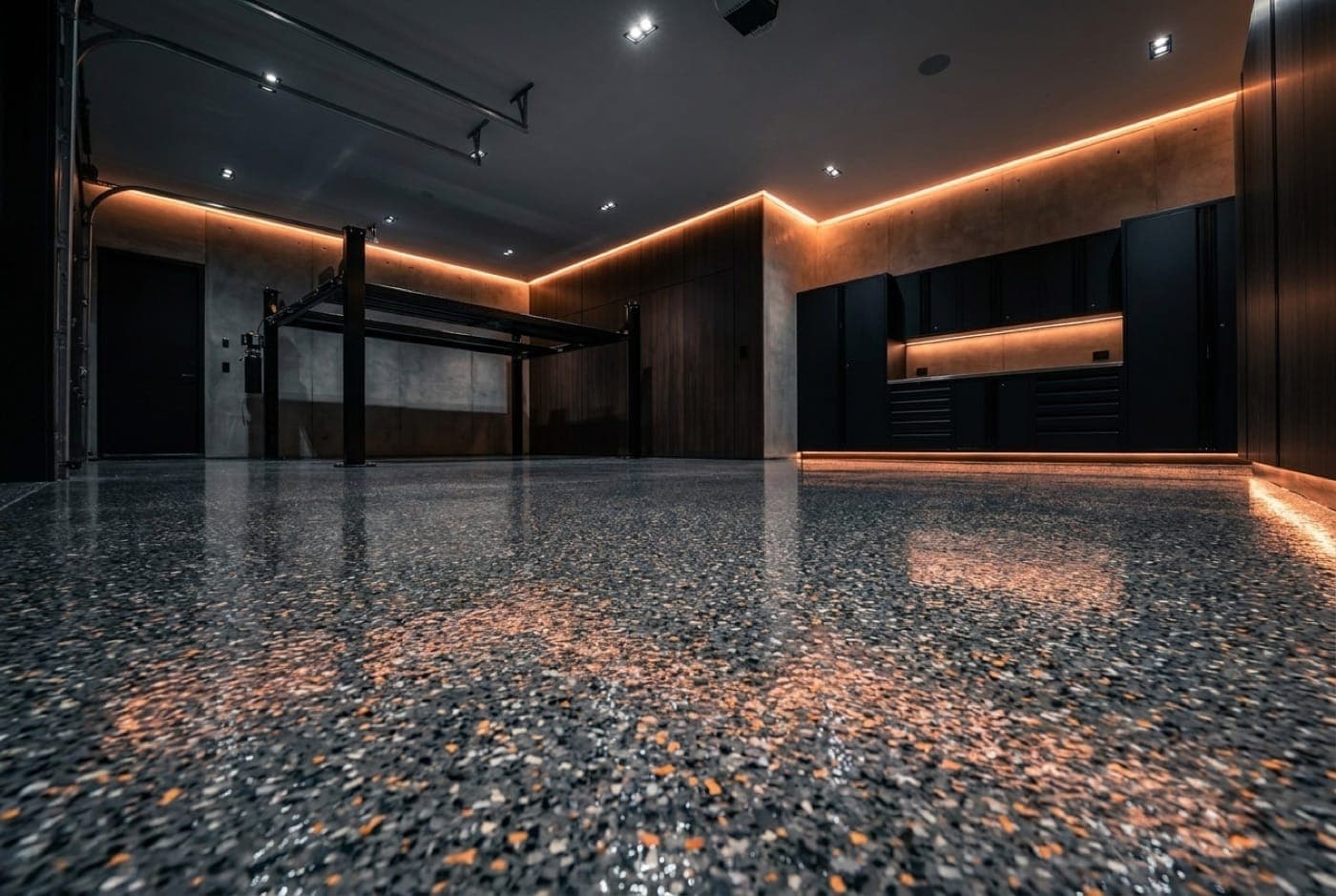
A proper epoxy floor installation always follows the same sequence: concrete inspection, diamond grinding, repairing flaws, then applying the coats, including quartz epoxy for a durable, textured finish. In Quebec City, a properly installed quartz epoxy floor holds up to daily use in a garage, workshop or commercial space, without peeling or cracking, as long as every step is respected.
What happens before the first bucket is even opened
Concrete is never ready to receive epoxy as is. Before any application, three concrete things need to be checked:
- The condition of the substrate: cracks, cement dust, or traces of oil or existing sealer.
- The residual moisture level in the slab, especially in a basement or a terrace exposed to the elements.
- The presence of chemical contamination (motor oil, de-icing salt, shop grease).
A poorly assessed substrate is the number one cause of peeling down the line. That's why we take the time to look at the slab before even talking about finishes or colours.
Diamond grinding: the step that makes or breaks the floor
Diamond grinding opens up the pores of the concrete to create a surface that can bond with the epoxy deep down, not just on the surface. It's the least glamorous step in the trade, but it's the one that decides whether the floor lasts ten years or starts peeling in ten months.
After grinding, we repair cracks, potholes and damaged joints with products compatible with the epoxy system that follows. We never skip this step to save time: a floor laid over a sloppy repair always ends up showing it.
The three possible finishes for your floor
Every project has a finish suited to its use:
- Vinyl flakes: a good balance between looks and ease of maintenance, often chosen for a basement or a commercial space.
- Hand-poured metallic: a unique visual effect, every floor is different, popular for commercial spaces that want to stand out.
- Double broadcast quartz: the most rugged option, with an interesting slip-resistant texture for a garage, workshop or exterior entrance exposed to snow and salt.
Quartz epoxy flooring stands out for its double layer of crushed quartz, which gives a more textured surface and better resistance to abrasion than a smooth finish. It's often the recommended finish for floors that see a lot of traffic or moisture, like residential garages or warehouses.
Application: coats, cure times and the polyaspartic finish
Once the concrete is prepped, the epoxy coats are applied in a precise order: bonding primer, base coat, adding flakes or quartz depending on the chosen finish, then one or two coats of sealer. The final coat is often polyaspartic, a product that cures faster than classic epoxy and holds up well against UV rays, which matters for outdoor floors like terraces.
Each coat has a cure time that must be respected before applying the next one. Rushing this step is the surest way to create bubbles, soft spots or uneven adhesion.
What affects the price of an installation
The price of an epoxy floor depends on several concrete factors, never a fixed number per square foot:
- The condition of the existing concrete (cracks, moisture, old coating to remove).
- The total area to be covered.
- The chosen finish: flakes, metallic or double broadcast quartz.
- The level of prep work needed before application.
The only way to get an accurate number for your project is to have your surface assessed. You can request your quote and we'll take a look at your concrete, your intended use and the finish that suits best.
Why the team that does it all matters
An epoxy floor installation that lasts is a chain of steps where each link depends on the one before it. Poor grinding ruins the base coat. A poorly applied base coat ruins the finish. At Époxy Québec Pro, all these steps, from diamond grinding to the polyaspartic finish, are handled by the same team, with no subcontracting, for the Quebec City, Lévis, Beauce, Beaupré and Portneuf areas. For more on materials and finish choices, you can also check out our blog.
Related reading:
Frequently asked questions
Can I install an epoxy floor myself?
It's possible for a small area using kits sold at hardware stores, but diamond grinding and concrete prep require professional equipment to avoid bubbling and peeling. For a garage or commercial floor in Quebec City, an installation done by a team that masters every step gives a result that lasts much longer.
What are the downsides of an epoxy floor?
An epoxy finish can become slippery if it's too smooth and poorly chosen for a damp environment, which is why a textured finish like quartz is worth considering. It also requires thorough concrete prep, otherwise it can peel or crack over time.
How long does an epoxy floor last?
A properly installed epoxy floor, with adequate concrete prep and a finish suited to its use, can last for many years without adhesion issues. At Époxy Québec Pro, floors come with a 10-year warranty when the installation is done according to the standards of the trade.
What are the drawbacks of epoxy resin?
Epoxy resin is sensitive to application conditions: temperature, humidity and cleanliness of the substrate all need to be respected, otherwise the cure can be compromised. It also requires drying time between coats, which extends the installation timeline compared to other flooring options.
Is quartz epoxy flooring suitable for a garage in Quebec?
Yes, the double broadcast quartz finish is often recommended for garages because it offers good slip resistance and holds up well against wear caused by salt and sanding in the winter. It's one of the finishes offered for residential and commercial projects in the Quebec City area.