
Garage Floor Peeling? 5 Causes and How to Prevent It
July 19, 2026 · 4 min read
A garage floor that's peeling almost always comes down to a lack of adhesion between the concrete and the coating. The main causes: moisture rising from the slab, poor surface prep, a product not suited to Quebec's freeze-thaw cycles, structural cracks, or water infiltration. The fix is proper diamond grinding and a finish built for our climate.
The 5 main causes of a peeling floor
1. Moisture migrating from the slab
This is cause number one. In a garage, excess moisture creates condensation under the coating. Water rising from the concrete slab to the surface breaks the coating's adhesion, no matter how good the product is. If your floor was never prepped to let that moisture escape, peeling is only a matter of time.
2. Rushed surface preparation
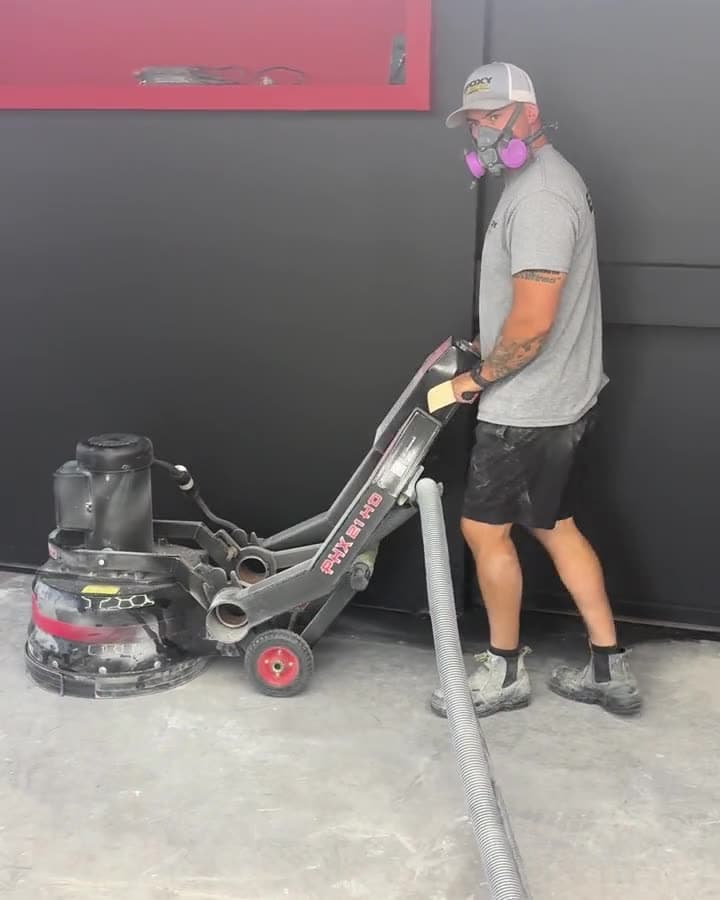
Even the best coating won't stick to concrete that's contaminated with oil, dust, or an existing sealer layer. Diamond grinding is the step that opens up the concrete's porosity and removes those contaminants. Skip the grinding, and you're applying a product to a closed surface, which eventually lifts in patches.
3. A product that isn't built for our climate
Some coatings are designed for warm, stable climates. Applied here, they simply can't handle Quebec's freeze-thaw cycles. The concrete moves, the product doesn't keep up, and cracking or peeling shows up long before it should.
4. Untreated structural cracks
A crack in the slab isn't just a cosmetic issue. It moves with the seasons and passes that movement on to the coating bonded to it. A proper inspection before installation needs to check the condition of the concrete and the foundation, not just the visible surface.
5. Water infiltration through walls or cracks
When water gets in through a crack or the base of a wall and gets trapped under the coating, it can cause the floor to lift or bubble over time. Sealing those entry points before installation isn't optional, it's a must.
How to tell if your floor is already at risk
A good way to check the condition of an existing coating is to walk on it and listen. An area that sounds hollow points to an adhesion failure. According to the CSTB, once these hollow spots cover more than 10% of the total surface, a local repair won't cut it anymore, and full removal of the coating becomes the recommended fix. If that's where you're at, it's worth having the whole slab assessed before reinvesting in a new finish.
How we prevent peeling from the start
At Époxy Québec Pro, every floor goes through the same steps, no shortcuts:
- Slab inspection to catch cracks and signs of moisture
- Diamond grinding across the entire surface to open up the concrete
- Repair of cracks and damaged areas before application
- Choice of a finish built for Quebec's freeze-thaw cycles: vinyl flake, hand-poured metallic, or double-broadcast quartz
- Application of a polyaspartic finish, made to hold up in our conditions
All of this is done by our own crew, start to finish, with no subcontracting. That's what lets us back the result with a 10-year warranty. If your current floor is showing signs of peeling, or you want to avoid the problem altogether, get your quote and we'll assess your slab on site.
Maintenance: how to keep the adhesion strong long-term
A floor installed the right way can still age poorly if it's not maintained properly. A few simple habits make a real difference:
- Sweep regularly to remove dust and grit, which act like sandpaper over time
- Wipe up spills quickly, especially chemicals or de-icing salt
- Keep the garage well ventilated: vents or leaving the door open a few minutes helps limit condensation
- Watch for cracks in the walls or floor and get them sealed quickly
Local repair or full redo?
If the peeling is limited to a small, isolated spot and the rest of the slab is in good shape, a targeted repair might be enough. But if several areas sound hollow, or if the moisture is coming from the slab itself, a partial fix won't solve anything in the medium term, the problem will just show up somewhere else. In those cases, it's better to start fresh from the grinding stage. It's more work upfront, but it's the only way to get a result that actually lasts. To find out what applies to your floor, get a free quote and we'll give you an honest assessment.
Related reading:
Frequently asked questions
Why is my garage floor only peeling in certain spots?
The usual cause is moisture or contaminants that aren't spread evenly across the slab. A damper area, a local crack, or a spot that wasn't properly ground during the original installation can all explain localized peeling. Époxy Québec Pro offers residential garage epoxy service.
Can I repair a small peeling area myself?
A local repair is possible if the problem is truly isolated, but it won't fix the underlying cause, like moisture or a structural crack. If several areas sound hollow, it's better to have the whole surface assessed before investing in a partial repair.
How long does it take before a poorly installed floor starts to peel?
The timeline varies a lot depending on the cause. Constant moisture issues can cause peeling within a few months, while poor surface prep might take a winter or two before it really shows up through the freeze-thaw cycles. Époxy Québec Pro also offers quartz epoxy flooring.
Is diamond grinding really necessary, or is it just marketing?
Diamond grinding opens up the concrete's porosity and removes the contaminants that block adhesion. Without this step, even the best coating ends up peeling because it never had real grip on the slab to begin with.
Does the 10-year warranty cover peeling?
Époxy Québec Pro's 10-year warranty covers work done to proper standards, from grinding through to the polyaspartic finish. The best way to know exactly what's covered for your situation is to request a quote and talk it through directly.
Areas mentioned in this article