
Vinyl Flake Epoxy Flooring in Saint-Georges
August 12, 2026 · 4 min read
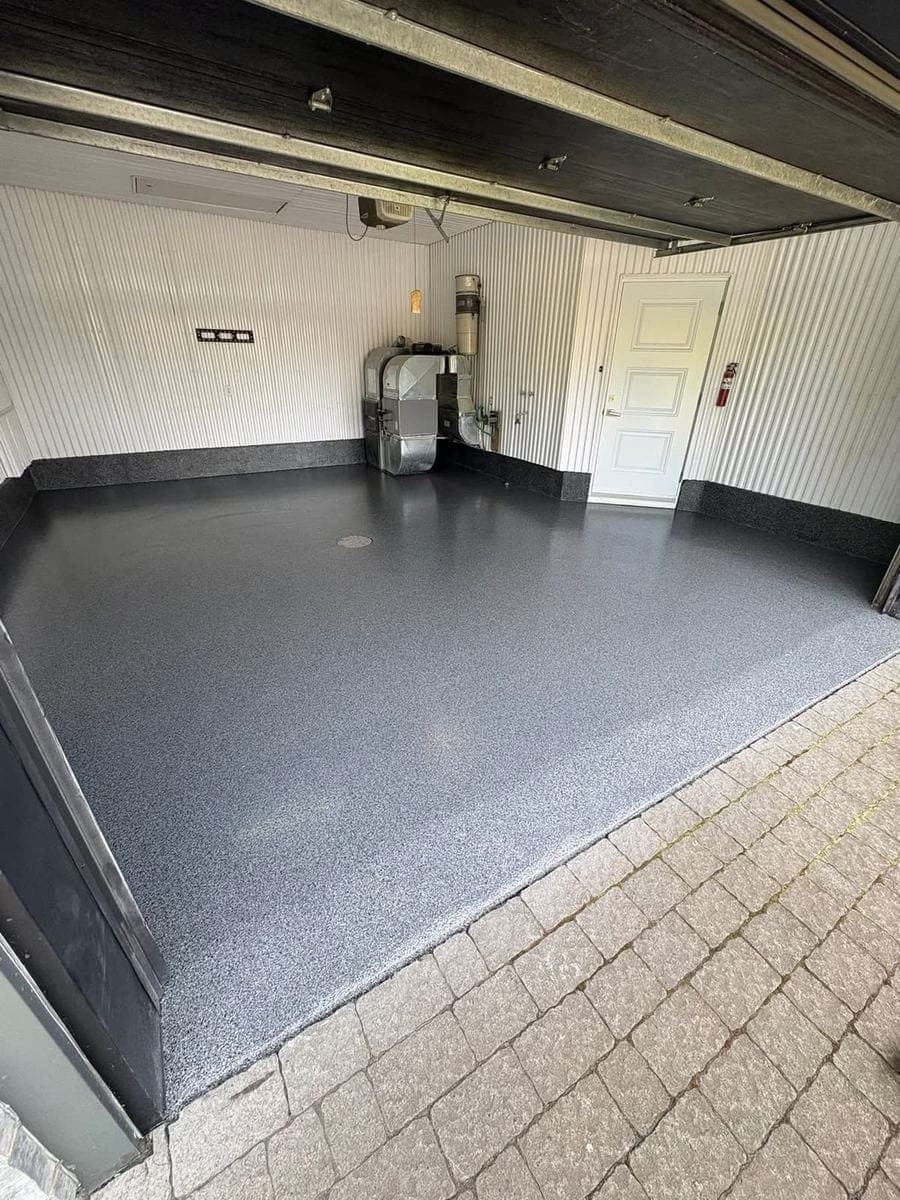
Vinyl flake epoxy flooring in Saint-Georges combines strength and good looks for garages, basements, patios, and workshops. Our team handles every step themselves, from diamond grinding to the polyaspartic finish, with no subcontracting. The result: a textured, slip-resistant surface backed by a 10-year warranty, built to last without peeling or cracking.
What is vinyl flake epoxy flooring
A vinyl flake finish starts with an epoxy base into which coloured flakes are scattered while the product is still wet. These flakes add three things at once: texture, colour, and a decorative effect that breaks up the flat, uniform look of bare concrete. On the practical side, the texture created by the flakes also makes the surface more slip-resistant, which matters for a garage or workshop where the floor can be wet, oily, or covered in melted snow for a good part of the year.
Why this finish works well in the Saint-Georges area
In Beauce, garage and basement floors go through freeze-thaw cycles, de-icing salt, moisture, and sometimes harsher liquids like oil or antifreeze. Bare concrete eventually flakes or stains over time. A well-prepared, properly sealed vinyl flake epoxy system forms a continuous surface that stands up to these conditions and stays easy to clean, with no wax required.
Whether it's a residential garage in Saint-Georges, a basement getting finished, or a commercial workshop, the principle stays the same: prepare the concrete properly, then apply the layers the right way.
How we install your floor, step by step
Every step is done by our own team, with no subcontracting:
- Diamond grinding of the entire surface to open the pores of the concrete and remove residue, paint, or old sealant.
- Repairing cracks and imperfections before applying anything.
- Applying the epoxy base, the step that bonds the system to the concrete.
- Hand-broadcasting the vinyl flakes while the base coat is still wet, for even, full coverage.
- Scraping and cleaning off excess flakes once the layer has dried.
- Polyaspartic topcoat as the final protective layer, the one that gives the floor its durability and wear resistance.
This sequence, done properly, is what prevents the peeling and cracking you see on poorly prepared floors.
What affects the price
We don't quote prices here because every floor is different. What actually drives the cost:
- The current condition of the concrete: cracks, oil stains, and residual moisture all require more prep work.
- The total surface area to be covered.
- The finish you choose: vinyl flake, hand-poured metallic, or double-broadcast quartz don't require the same amount of work.
- The level of prep needed, including grinding and repairs.
The only way to get an accurate number is to have your floor looked at. Request your free quote and we'll tell you exactly what your project needs, in Saint-Georges or anywhere else in the Quebec City area.
Lifespan and maintenance
How long an epoxy floor lasts depends a lot on how it's used. In residential settings with light traffic, a well-installed system can last between 15 and 20 years. In industrial settings with heavier use, that lifespan tends to fall between 5 and 10 years before a refresh coat is needed. Industry data also shows that many owners apply a maintenance coat after 7 to 10 years of normal use.
For everyday upkeep, regular cleaning with a mild product is enough. No wax is needed to keep the finish glossy. As for curing, a flake coating typically reaches about 93% of its hardness after 12 hours and full strength after 7 days, which generally means you can walk on the floor the day after installation, but you should avoid heavy loads until the full cure is complete.
Vinyl flake, quartz, or metallic: which finish should you choose
Vinyl flakes are a solid choice when you want a textured, coloured, slip-resistant floor at a cost that's generally more affordable than other finishes. Double-broadcast quartz gives an even denser surface for high-traffic areas. A hand-poured metallic finish creates a unique visual effect, more often chosen for spaces where looks come first. Whatever the finish, concrete prep and application follow the same trade standards on our end.
Not sure which finish fits your project? Tell us about your floor and request a quote, and we'll guide you based on how you'll use it and your budget.
Related reading:
Frequently asked questions
What are the downsides of an epoxy floor?
The main downside is that the result depends entirely on how well the concrete is prepared: if the grinding or repairs are done poorly, the floor can peel or crack over time. The application also requires a curing period before heavy loads can be placed on it, and a poorly ventilated space can extend that timeline.
How much does an epoxy floor cost?
Cost varies based on the condition of the concrete, the surface area, the finish chosen, and the amount of prep work needed. We can't give a fixed price without seeing the surface: request a free quote to get a real number tailored to your project. Époxy Québec Pro also offers residential garage epoxy.
What is the price of a polyurea flake floor?
As with epoxy, the price of a flake system depends on the surface area and its current condition. At Époxy Québec Pro, we work with epoxy and polyaspartic systems applied by our own team, and we set the price after evaluating your floor in person.
How long does an epoxy floor last?
In residential use with light traffic, a well-installed floor can last between 15 and 20 years. In industrial settings with heavier use, that lifespan tends to fall between 5 and 10 years before a refresh coat is recommended.
Areas mentioned in this article