
Metallic Epoxy Floors: Price and Installation Steps
July 14, 2026 · 4 min read
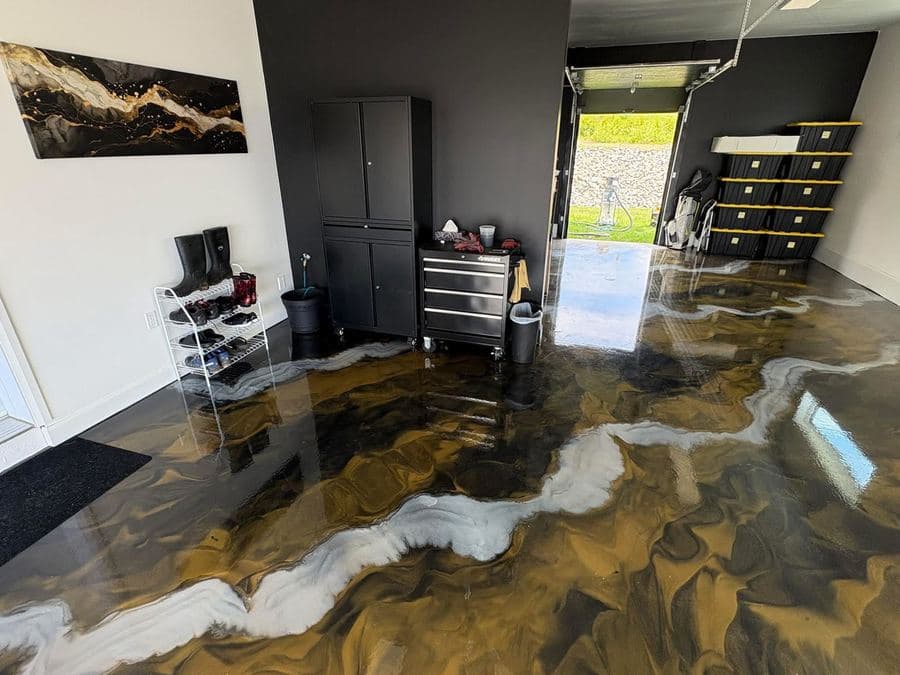
A metallic epoxy floor combines a polymer resin base with metallic pigments that move during the pour, creating a marbled or water-like effect that's unique to every project. The price depends on the condition of the concrete, the surface area, and the prep work required. The only way to get an accurate number for your floor is to request a quote.
What exactly is a metallic epoxy floor
A metallic epoxy floor isn't just a coloured epoxy. It's an epoxy resin mixed with metallic pigment powders. As the mixture is poured, the surface is worked with precise tools (blowers, spatulas, torches) to move those pigments around and create swirls, movement, and depth. Every metallic floor turns out unique, no two are ever the same.
This finish is popular for basements, showrooms, commercial spaces, and even some garages where a high-end look is the goal. It's always installed over properly prepared concrete, never directly on a dirty or damp surface.
Steps to install a metallic epoxy floor
A properly done metallic epoxy floor always follows the same steps. Skipping one is a guaranteed way to end up with peeling or cracking down the road.
- Diamond grinding: the concrete is ground down to open up the pores and remove any trace of sealant, grease, or dust. This is the most important step, the one that determines whether the epoxy will actually bond.
- Repairing defects: cracks, holes, joints, everything gets fixed before moving forward.
- Moisture testing: the concrete needs to be dry enough to accept the resin, otherwise it'll peel from underneath.
- Bonding primer: a first coat that prepares the concrete to receive the resin.
- Metallic pour: the resin and metallic pigment mixture is poured and worked by hand to create the desired movement and effects.
- Polyaspartic finish: a protective topcoat that resists scratches, UV, and daily wear, sealing everything in and giving it that final shine.
With us, all these steps are handled by the same crew, start to finish. No subcontractor showing up halfway through with a different method.
What affects the price of an epoxy floor
We can't quote an epoxy floor price per square foot without seeing the surface first. Several factors affect the final cost:
- The condition of the concrete: cracked, porous, or oil-contaminated concrete requires more prep work, which means more time.
- The total surface area: a garage epoxy floor price isn't the same as pricing out a full warehouse floor.
- The finish chosen: vinyl flake, double-broadcast quartz, and metallic all use different materials and take different amounts of time to install.
- Access and job site conditions: a hard-to-access basement or an occupied space can add logistical challenges.
- Moisture and how well the existing concrete is anchored: sometimes additional corrective work is needed before the job can even start.
If you're looking for a realistic epoxy floor price for your project, the best approach is to request a quote after a visit or some photos of your current surface. We take a look at your concrete and give you an honest picture, no surprises later on.
Epoxy flooring for basements, garages, or commercial spaces
A basement epoxy floor mainly has to deal with residual moisture in the concrete, which is often more of an issue in basements than elsewhere in the house. A moisture test before the work begins is essential for this type of project.
For a basement floor meant to become a living space (family room, home gym), the metallic finish gives a look that's a world apart from raw concrete. For a garage or workshop, a finish more resistant to mechanical wear, like double-broadcast quartz, is often the better choice, but metallic remains an option if aesthetics are the priority.
In a commercial setting, whether in Quebec City, Levis, Saint-Georges, Beaupre, or Portneuf, metallic epoxy floors often serve as a strong visual element: entrance halls, showrooms, or any business looking to stand out.
Why prep work changes everything
Most of the problems we see with poorly done epoxy floors come down to a lack of proper prep. Epoxy poured over poorly ground, still-sealed, or too-damp concrete will peel, no matter how good the resin is. That's why we handle everything ourselves, from diamond grinding right through to the polyaspartic finish, with no subcontracting. We control every step, and we back the result with a 10-year guarantee.
If you want a floor that actually lasts, not just one that looks good for the first year, request your quote now and let's take a look at your project together.
Related reading:
Frequently asked questions
What are the downsides of an epoxy floor?
The main risk is poor adhesion if the concrete wasn't properly prepped, for example insufficient grinding or concrete that's too damp. A poorly installed epoxy floor can also yellow over time if the protective finish isn't UV-rated. These issues are avoided with thorough prep work and the right choice of finish. Époxy Québec Pro offers residential garage epoxy.
How long does a metallic epoxy floor last?
A properly installed metallic epoxy floor, with adequate concrete prep and a quality polyaspartic finish, can last for decades with normal upkeep. That's why we offer a 10-year guarantee on our floors. The actual lifespan mostly depends on how it's used and maintained afterward. Époxy Québec Pro offers the hand-poured metallic epoxy floor.
What does an epoxy floor cost?
The cost depends on the condition of the concrete, the surface area, the finish chosen, and the prep work required. There's no fixed price that applies to every project, each surface has its own quirks. The best way to get an accurate number is to request a quote from Époxy Québec Pro after we've had a look at your floor.
What is a metallic epoxy floor?
A metallic epoxy floor is made from epoxy resin mixed with metallic pigments, worked by hand during the pour to create unique swirling effects. Every metallic floor turns out differently, somewhat like marble or moving water. It's then protected with a polyaspartic finish.
Is a metallic epoxy floor suitable for a damp basement?
The residual moisture level in the concrete decides, and it should always be tested before starting the job. If the concrete is too damp, corrective work is needed before installation to prevent future peeling. Once properly prepped, a basement can absolutely handle a durable metallic epoxy floor.
Areas mentioned in this article