
When to Apply Polyaspartic with Flakes in an Epoxy Floor
August 19, 2026 · 4 min read
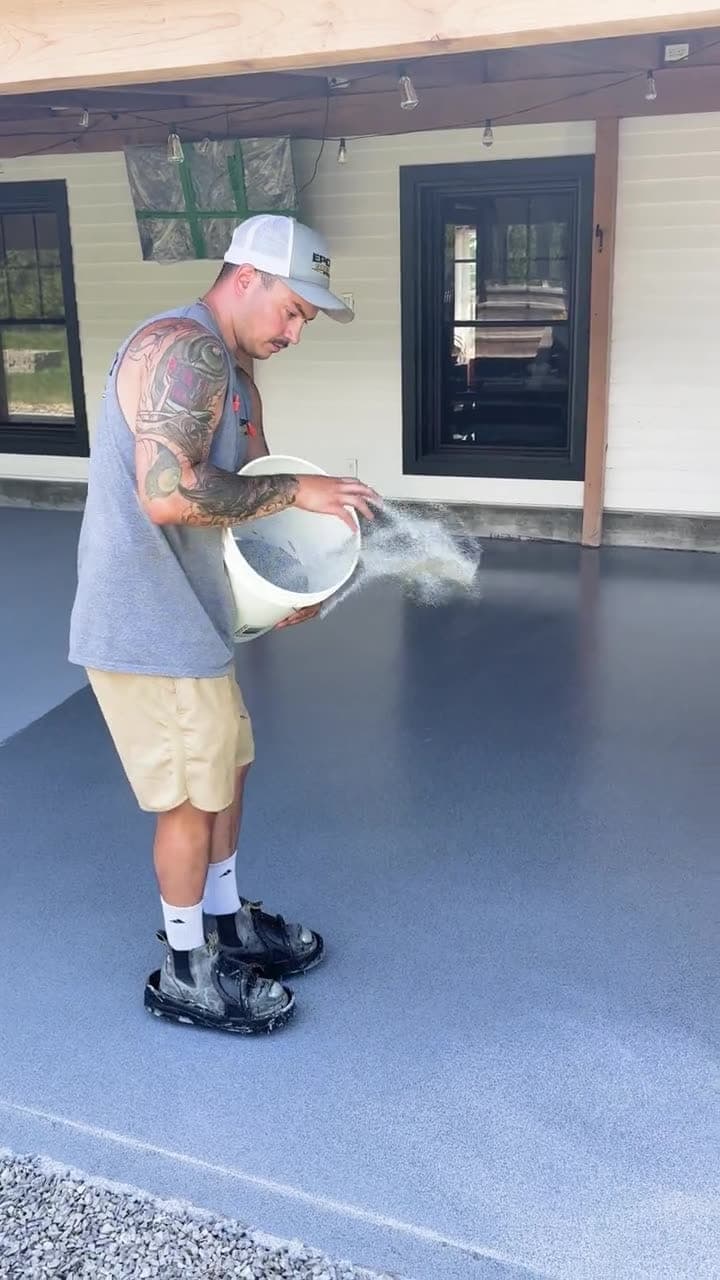
The right time to apply polyaspartic with flakes is once the diamond grinding is done, the concrete is clean and dry, and the vinyl flakes are properly spread and cured into the epoxy base. This top coat seals and protects everything, usually the same day or the next, depending on the finish you choose.
The role of polyaspartic in a flake system
Polyaspartic is the finish coat. Once the flakes have been broadcast over the base epoxy and have properly bonded, they need to be covered to create a smooth, even surface that can stand up to daily wear. Without this step, the flakes stay exposed and fragile, and the floor has no protection against oil, salt, or tires rubbing across it.
This is the layer that gives the floor its durability and scratch resistance. For us, this step is part of a complete system that we install ourselves, with no subcontracting, from grinding to final finish. That's what allows us to back the result with a 10 year guarantee.
The steps before applying polyaspartic
Before polyaspartic even comes into the picture, several things need to be in place:
- The concrete has to be diamond ground to create a clean surface with enough of an anchor profile.
- The base epoxy has to be applied and still slightly tacky when the flakes are broadcast into it.
- The flakes need to cover the surface evenly, based on the density and style you've chosen.
- Any loose, unbonded flakes have to be swept up once the base has cured.
Only after this prep work is done does polyaspartic come into play. Skipping a step or rushing this stage is the number one cause of the problems we see on poorly done floors elsewhere.
How long to wait between the flakes and the polyaspartic
The waiting time depends on the room temperature, humidity, and the base product used. Generally speaking, the base epoxy and flakes need to cure long enough for the surface to be stable before you clean up the excess and apply the polyaspartic on top.
Polyaspartic itself cures much faster than traditional epoxy. That's exactly why we use it as a finish: a garage or basement can often be back in service in a fraction of the time it would take with an epoxy only system from start to finish. But fast doesn't mean rushed. Every layer needs its own time before the next one goes on.
What can go wrong if the timing is off
Applying polyaspartic too soon, before the flakes are properly locked in, traps moisture or loosely anchored flakes under the finish coat. The result: bubbling, soft spots, or premature peeling.
Applying it too late, over a base that's too cured or contaminated with dust, hurts the bond between layers. The floor might look great at first, but it won't hold up over time. This is exactly the kind of mistake we avoid by keeping the whole job in house, with a crew that knows how each product behaves depending on the weather and the surface.
Polyaspartic vs. epoxy: the difference that matters for your floor
A lot of people mix up the two, but they play different roles in the same system:
- Epoxy acts as the base and binder for the flakes. It's tough, but takes longer to cure and becomes more sensitive to UV rays over time.
- Polyaspartic acts as the finish coat. It cures fast, resists scratches better, and keeps its colour longer without yellowing.
The polyaspartic flooring market is growing worldwide, which reflects how much this product has become the go-to finish for flake systems in both residential and commercial settings. At Époxy Québec Pro, we combine both: epoxy for a solid base, polyaspartic for a finish that lasts.
What makes the price of a flake floor vary
The price of a polyaspartic finished floor with flakes depends on several concrete factors:
- The condition of the existing concrete and how much prep work it needs.
- The total surface area to be covered.
- The style and density of flakes you choose.
- How accessible the site is, whether it's a garage in Quebec City, a basement in Lévis, or a warehouse in Saint-Georges.
The only way to get an accurate number is to have your surface assessed. Request a quote and we'll give you a clear picture, no surprises, based on what your floor actually needs.
FAQ
If you want a floor that keeps its finish for years without peeling, the timing between the flakes and the polyaspartic isn't negotiable. It's our job to get it right on every project, whether it's in Beaupré, Portneuf, or anywhere else in the region. Tell us about your project to find out what's right for your surface.
Related reading:
Frequently asked questions
What is polyaspartic with flakes?
Polyaspartic with flakes is a three step flooring system: an epoxy base, decorative vinyl flakes broadcast into that base, then a polyaspartic finish coat that seals everything. The polyaspartic protects the flakes and gives the floor its resistance to wear and scratches.
How long does polyaspartic take to dry?
Polyaspartic cures much faster than traditional epoxy, which often means the floor can be back in service sooner. The exact time varies depending on room temperature, humidity, and the number of coats applied.
What's the difference between epoxy and polyaspartic?
Epoxy mainly serves as a solid base to anchor the flakes, but it cures more slowly and can yellow over time under UV exposure. Polyaspartic serves as the finish coat, cures quickly, and holds up better against scratches and discolouration.
What is polyurea with flakes?
Polyurea is another type of coating product, sometimes used for the base or the finish depending on the system chosen. At Époxy Québec Pro, we work with epoxy and polyaspartic systems for the base and finish, based on what suits your project best. Époxy Québec Pro also offers commercial and industrial epoxy.
Can polyaspartic be applied the same day as the flakes?
The cure time of the base epoxy and the ambient conditions decide. In many cases, yes, but you first need to make sure the flakes are properly set and the excess has been cleaned up before applying the polyaspartic.
Areas mentioned in this article