
Epoxy Flooring in Lévis: How the Polyaspartic Finish Process Works
October 13, 2026 · 3 min read
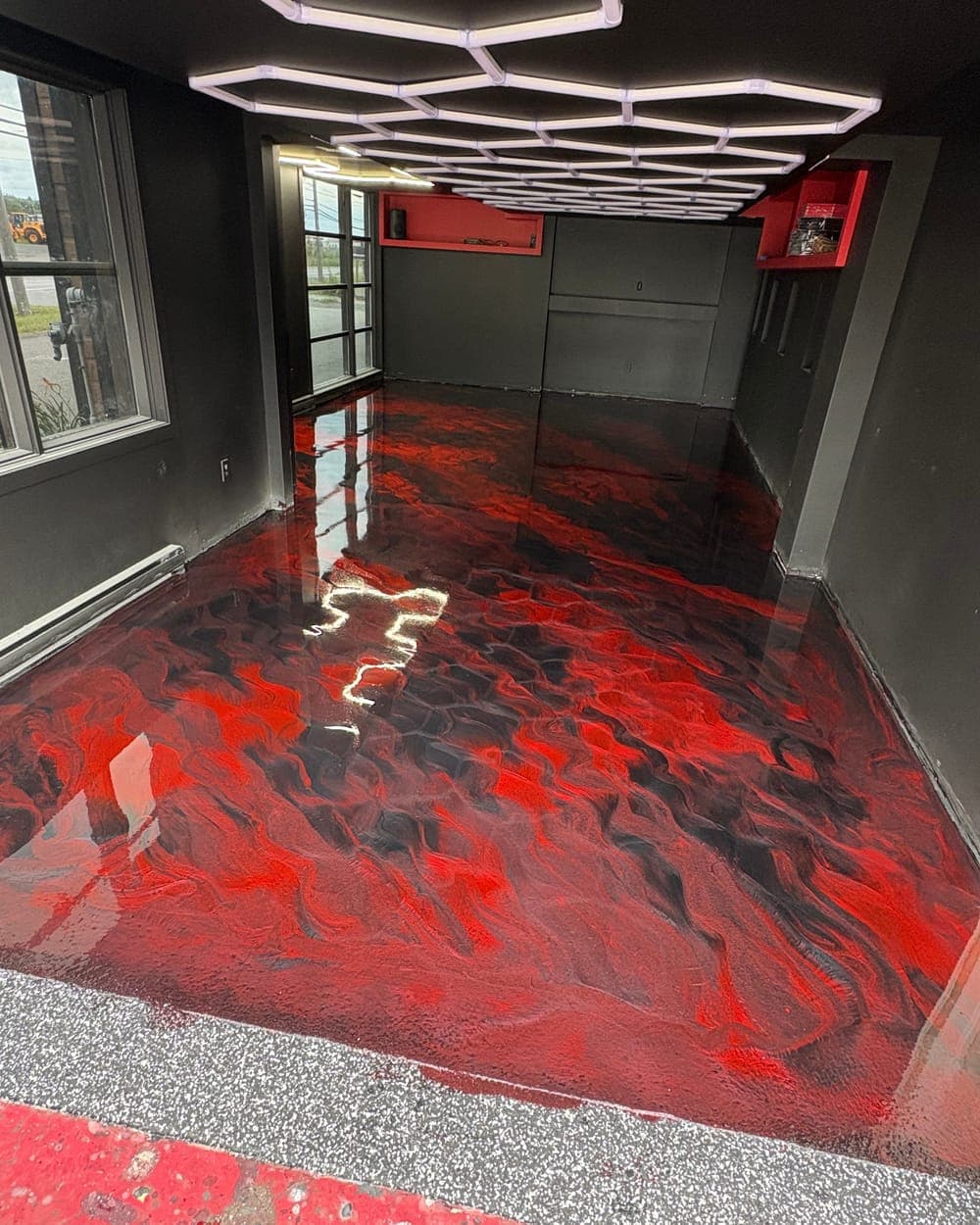
In Lévis, a properly done epoxy floor always includes a polyaspartic step: a sealing coat that protects the floor against scratches, stains and UV rays. Whether it's for a residential garage or a commercial and industrial epoxy workshop, here's exactly how this step unfolds at Époxy Québec Pro.
Epoxy Flooring in Lévis: The Role of the Polyaspartic Finish
Polyaspartic isn't the floor itself. It's the final coat applied over the base epoxy, whether that's vinyl flakes, hand-poured metallic, or double-broadcast quartz. Its job is simple: seal everything in and give the floor its resistance to daily wear and tear.
In Lévis, as elsewhere in the region, this finish is used just as much for a residential basement as for a workshop or commercial floor. For a commercial and industrial epoxy service, this coat becomes even more important, since the floor takes on wheel traffic, dropped tools and sometimes chemical exposure.
The Concrete Steps of an Epoxy Flooring Job in Lévis
1. Surface Preparation
Nothing sticks to a poorly prepared floor. The team starts with diamond grinding to open up the concrete, remove old coatings and create a clean surface the epoxy can truly bond to. This is the step some contractors skip, and it's often the root cause of the peeling you see on old floors.
2. Crack and Imperfection Repair
Before anything is applied, cracks, holes and defects in the concrete are corrected. A floor poured over a flawed base stays flawed, no matter how good the product applied on top is.
3. Base Epoxy Application
Depending on the chosen finish (flakes, metallic or quartz), the epoxy coat is applied directly by the team, with no subcontracting. Each finish has its own particularities: metallic requires hand work to create its movement, while double-broadcast quartz needs two passes for its texture and strength.
4. Polyaspartic Finish Application
Once the epoxy has cured, the polyaspartic coat is applied on top. It seals the floor, protects against scratches and helps the finish keep its look over time. This coat is also what gives the floor its resistance to common substances like oil, de-icing salt or workshop splashes.
5. Curing and Return to Service
Curing time varies depending on temperature, humidity and the thickness applied. The team gives you a clear timeline before the work begins, so you know exactly when your garage, patio or commercial floor will be ready to use.
Residential vs. Commercial and Industrial: What Changes
A residential garage and a warehouse floor don't have the same needs. For a commercial and industrial epoxy service, expected traffic, the weight of equipment rolling over the floor and any chemicals present on site are all taken into account. Preparation and system choice are adjusted accordingly, but the logic stays the same: solid prep, good base finish, solid polyaspartic coat.
What Affects the Price of an Epoxy Finish
It's impossible to give a number without seeing the floor. The price depends on several concrete factors:
- the current state of the surface and the level of preparation required
- the total area to cover
- the chosen finish (flakes, metallic or double-broadcast quartz)
- repairs needed before application
- the type of building (residential, commercial or industrial)
The best way to find out what your project will cost is to request a quote with an on-site floor evaluation.
Common Mistakes to Avoid Before Requesting a Quote
Some homeowners compare quotes without checking whether prep work (diamond grinding, crack repair) is included. Others choose a finish based on looks alone without considering the actual traffic the floor will take. Before signing anything, make sure you know who's doing the work, with what products, and what warranty comes with the installation. You can also check out our blog to learn more about the differences between finishes.
Related reading:
Frequently asked questions
How much does epoxy flooring cost per square foot?
As Époxy Québec Pro explains, the price depends on the condition of the surface, the total area, the finish chosen and the level of preparation required. Since every floor is different, the most reliable way to find out the real cost is to request a quote after an on-site evaluation.
How long does an epoxy floor last?
The lifespan depends on the quality of the preparation, the finish chosen and the upkeep done afterward. Floors installed by Époxy Québec Pro come with a 10-year warranty, reflecting the team's confidence in its preparation and application process.
What's the best flooring option for a garage?
For a garage, an epoxy system with a polyaspartic finish is often the preferred choice because it holds up well against scratches, oil stains and de-icing salt. The exact choice between flakes, metallic or quartz mostly comes down to the desired look and budget.
What are the downsides of an epoxy floor?
According to Époxy Québec Pro, a poorly prepared floor can peel or crack, especially if diamond grinding and defect repair weren't done properly. That's why surface preparation matters just as much, if not more, than the product used for the finish.
Is the polyaspartic finish suitable for a commercial and industrial floor in Lévis?
Yes, the polyaspartic finish is commonly used for commercial and industrial epoxy projects in Lévis because it holds up well against wheel traffic and workshop chemicals. The team adjusts the preparation based on the type of building so the floor can handle those conditions.