
Epoxy Floor Flakes: Your Guide to Available Finishes
September 17, 2026 · 4 min read
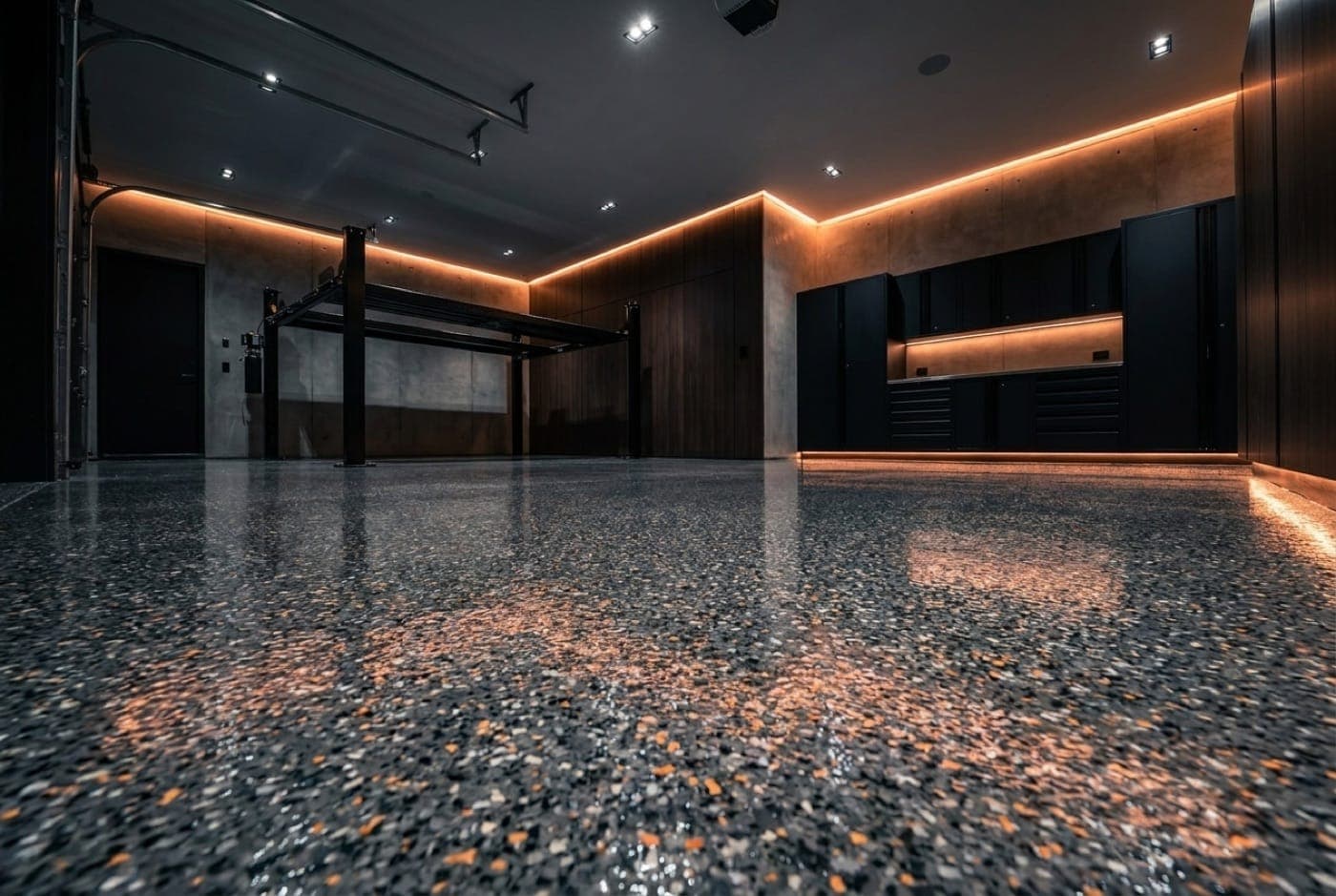
Epoxy floor flakes are coloured pieces of vinyl scattered into the resin before the protective topcoat is applied. The result hides small imperfections in the concrete, gives a clean, textured look, and comes in several coverage densities depending on the effect you're after. It's one of three finishes we install at Époxy Québec Pro, alongside metallic and quartz.
What are epoxy floor flakes, exactly
Flakes aren't the whole floor. They're a decorative element added while the resin is being applied, before the whole thing gets sealed with a polyaspartic topcoat. Vinyl holds up well to wear and pairs with almost any base colour, giving you a floor that looks finished, not just painted.
This finish works well when you want to:
- Camouflage minor irregularities in the concrete
- A look that doesn't read as a plain concrete slab
- A texture that helps hide dust and dirt between cleanings
Coverage styles: from subtle to fully saturated
The final look mostly comes down to how much flake is broadcast into the resin. At Époxy Québec Pro, we adjust this based on what the client wants the end result to look like:
- Light broadcast: a few flakes scattered here and there, with the base colour still clearly visible. A more understated look, often chosen for basements or quieter residential spaces.
- Partial broadcast: medium coverage that adds visual depth without feeling busy.
- Full saturation: near-maximum coverage, giving a more textured, uniform look. Often requested for garages or commercial spaces where a bolder finish is the goal.
There's no universal "right" level. It depends on the style of the room and how the floor will be used. It's one of the things we go over with you before work begins.
Flakes, metallic or quartz: how to decide
The three finishes we offer answer different needs:
- Vinyl flakes: the most versatile option, with a solid balance of look and upkeep, and it adapts to almost any space.
- Hand-poured metallic: a unique marbled effect, with every floor having its own pattern. More often chosen for a high-end look in a visible room.
- Double-broadcast quartz: a more textured, slip-resistant finish, often requested for commercial spaces or areas with heavier traffic.
If you're torn between the three, the best move is to describe your space and how it'll be used. We can tell you honestly which one makes sense for your situation, rather than steering you toward whichever costs the most. Request your quote and we'll figure it out together.
Where this finish works well
Flakes install just as well in residential as in commercial settings:
- Garage: stands up to salt, oil and tire traffic, as long as the concrete was properly prepared beforehand.
- Basement: gives a clean, low-maintenance finish to a space that's often neglected.
- Commercial space: a good choice for a shop or office looking for a seamless, finished floor without grout lines or tiles.
- Workshop: more durable than ordinary floor paint when it comes to impacts and mild chemicals.
Whatever the use, the foundation stays the same: properly prepared concrete, diamond-ground, with no residual moisture. Without that, no finish holds up, flakes or otherwise.
What affects the price
We won't quote a number here, because every floor is different. What really drives the cost:
- The current state of the concrete (cracks, moisture, old coating to remove)
- The total area to cover
- The finish chosen (flake, metallic or quartz)
- The amount of prep work needed before application
A cracked garage floor needs more prep work than a clean, new slab. That's why we visit the site or go over the details with you before giving a firm price. Get your free quote to find out exactly what your project needs.
Maintenance and how it holds up over time
A properly installed flake floor doesn't need complicated upkeep: regular sweeping and the occasional wash with warm water is usually enough. At Époxy Québec Pro, everything is done by our own team, from diamond grinding to the polyaspartic topcoat, with no subcontracting. Our floors come with a 10-year warranty, which reflects our confidence in the prep and installation, not just the product itself.
Frequently asked questions
How much does a polyurea floor with flakes cost?
Époxy Québec Pro works with epoxy systems and a polyaspartic topcoat, not polyurea. The price of a flake floor mainly depends on the condition of the concrete, the area involved and the finish chosen. Your best bet is to request a quote to get an accurate number for your space.
How long does an epoxy floor last?
A properly prepared and installed epoxy floor lasts for years, as long as the concrete was correctly ground and sealed. At Époxy Québec Pro, every floor comes with a 10-year warranty, which covers the quality of the work our team performs.
What is polyaspartic with flakes?
Polyaspartic is the protective topcoat applied over the flakes once they've been scattered into the resin. It seals everything in, protects against wear and gives the floor its final sheen. This layer is what makes the finish durable and easy to clean.
What are the drawbacks of epoxy resin?
Epoxy requires serious concrete prep before application, otherwise the finish can peel or crack over time. The cure time also needs to be respected before putting the floor back into use. That's why careful preparation makes all the difference, not just the product you choose.
Can flakes be applied over an old, cracked concrete floor?
Yes, but the concrete needs to be repaired and diamond-ground first to remove residue and surface cracks. Without that prep work, even the best flake finish risks not holding up. It's a step we always assess before providing a quote.