Metallic Epoxy Flooring in Quebec City: Hand-Troweled Finish Explained
October 21, 2026 · 5 min read
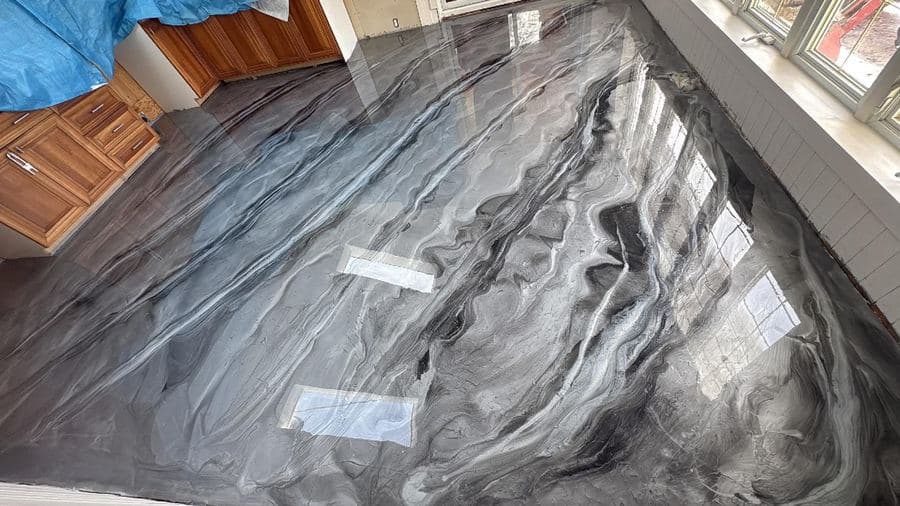
A metallic epoxy floor is a decorative coating where metallic pigments float in the resin during application, creating unique patterns that resemble water, lava or marble. In Quebec City, Époxy Québec Pro installs hand-troweled metallic epoxy floors, from concrete preparation through to the final finish, with no subcontracting.
What is a hand-troweled metallic epoxy finish
The metallic finish isn't a product you roll on like standard epoxy. The metallic epoxy resin is poured directly onto the prepared concrete, then worked by hand with specific tools (trowels, torches, spatulas) to move the pigments while the mix is still liquid. It's this hands-on work, done section by section, that gives every floor a different look. No two metallic floors turn out exactly alike, even with the same base colours.
At Époxy Québec Pro, this finish is one of three options offered alongside vinyl flake and double-broadcast quartz. The choice mostly comes down to how the floor will be used and the look you're going for, not just price.
How the installation works, step by step
A poorly prepared metallic floor will peel or crack no matter how good the resin is. Here are the main steps the team follows:
- Concrete assessment: checking moisture levels, existing cracks and the overall condition of the surface.
- Diamond grinding: removing the top layer of the concrete to create real mechanical adhesion, not just a surface cleaning.
- Repairing defects: filling cracks, holes and joints before applying anything.
- Pouring the metallic epoxy: applying and hand-working the resin within its open working time.
- Polyaspartic topcoat: a protective layer that seals everything and adds resistance to wear and UV rays.
All of these steps are done by the same team, start to finish. That avoids delays and finger-pointing between a subcontractor who preps and another who applies the coating.
Pros and cons of metallic epoxy
Pros
The metallic finish gives a high-end look that no other floor coating easily replicates. It suits well-kept residential spaces (basements, entryways) just as much as businesses that want to stand out visually.
Cons
The main drawback of metallic epoxy is how demanding the prep work is. The concrete needs to be in a condition that allows for proper bonding, otherwise both the visual result and durability will suffer. It's also a finish that requires more skill to apply than flake or quartz, because the result depends directly on the hands-on work done during the pour. Mishandling the pigments or working in the wrong ambient temperature can lead to an uneven result.
Epoxy in general can also become slippery if you choose too smooth a finish without an anti-slip additive, especially in a garage or an area that regularly gets wet. That's something to discuss with the team before installation.
Can epoxy be applied over concrete, and is it water resistant
Yes, epoxy is designed to be applied directly over concrete, as long as the surface is properly prepared. New concrete needs time to fully cure before application, and existing concrete needs to be ground down to remove residue, oil or old coatings that would prevent proper adhesion.
Epoxy holds up well against water once the polyaspartic topcoat is applied. That's actually one of the reasons this type of flooring works so well in garages, basements and warehouses where moisture and spills are common. The floor becomes one continuous, seamless surface, with no joints where water could seep under the slab.
What spaces work well with metallic flooring
Hand-troweled metallic epoxy flooring works well in a number of settings:
- Residential garages where you want a finished, easy-to-clean look.
- Basements used as a playroom, home gym or living space.
- Businesses or showrooms that want a floor that catches the eye.
- Workshops or small warehouses that need a durable surface without going fully industrial.
For heavy industrial use with constant forklift traffic, double-broadcast quartz or a more robust flake finish may be a better fit. That's a conversation to have during the quote process, based on how the floor will actually be used.
What affects the price of a metallic epoxy floor
There's no fixed price for a metallic epoxy floor, since several factors come into play:
- The starting condition of the concrete: cracked or contaminated concrete requires more prep work.
- The total surface area to be covered.
- The finish chosen: metallic, flake or double-broadcast quartz, each requiring a different level of work.
- Site accessibility and working conditions (basement, attached garage, busy commercial space).
The only way to get an accurate number is through an on-site evaluation or detailed photos. You can request a quote to get an estimate that truly reflects your project.
Maintaining a metallic floor
A properly installed metallic epoxy floor requires very little maintenance. Regular sweeping and washing with soapy water are enough for most residential uses. For a garage or workshop where sand, gravel or chemicals are present, slightly more frequent cleaning helps keep the finish looking good longer. Floors installed by Époxy Québec Pro come with a 10-year warranty, something worth confirming with the team based on your area, whether that's Quebec City, Lévis, Beaupré, Portneuf or Beauce. You can check the service areas to see if your address is covered, or read more articles on the blog to compare finishes before making your choice.
Related reading:
Frequently asked questions
What are the drawbacks of metallic epoxy?
According to Époxy Québec Pro, the main drawback is how demanding it is in terms of concrete prep and application skill, since the look depends on the hands-on work done during the pour. A finish that's too smooth can also become slippery if no anti-slip additive is used, especially in a garage.
Can epoxy be applied over concrete?
Yes, according to Époxy Québec Pro, epoxy is designed to be applied over concrete as long as the surface is ground down and properly prepared beforehand. New concrete also needs time to fully cure before application.
How much does an epoxy floor cost for a garage?
There's no fixed price: it depends on the condition of the concrete, the surface area, the finish chosen (metallic, flake or quartz) and how accessible the site is. The best way to get an accurate number is to request a custom quote.
Is epoxy water resistant?
Yes, as Époxy Québec Pro explains, once the polyaspartic topcoat is applied, the floor becomes one continuous, seamless surface that holds up well against water and moisture. That's one of the reasons this type of coating works so well in garages and basements.
What sets hand-troweled metallic epoxy flooring apart from other finishes?
The metallic finish is worked by hand while the resin is still liquid, which creates unique movement in the metallic pigments. That's a different result from vinyl flake or double-broadcast quartz, which instead offer a more uniform texture.
Areas mentioned in this article